Event 1
Alberte Goldschmid Hit-and-Run
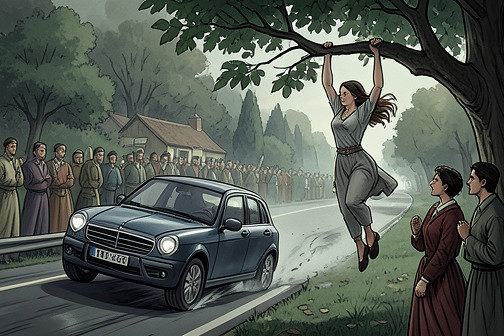
[Alberte Goldschmid](entity:character-recall-character-alberte-goldschmid-6bdc83927ee1)’s hit-and-run became a defining unsolved case for [Christian Habersaat](entity:character-recall-character-christian-habersaat-943273d2076f): a violent collision that left almost no usable trace, and an investigation whose apparent conclusion could not explain how she had been thrown into a tree. On [November 20, 1997](entity:time-recall-time-november-20-1997-497654dd2b0e), she was struck on [Bornholm](entity:location-recall-location-bornholm-ba560d38c175); more than a day passed before she was found, suspended high in a roadside tree. The accident was treated as a serious traffic collision, but the evidence never identified the vehicle or driver. Later work by [Department Q](entity:organization-recall-organization-department-q-6fa26a84f675) complicated the original reconstruction rather than resolving the case outright: it suggested that the impact may have involved more than a vehicle’s fender, while also ruling out one board as the object that launched her.
## The Collision and Delayed Discovery
November 20 was an ordinary day at [Bornholm Folk High School](entity:location-recall-location-bornholm-folk-high-s-c925391e5922). [John Birkedal](entity:character-recall-character-john-birkedal-51831978fc72) described a community of about fifty students, aged eighteen and older, studying subjects including music, glasswork, painting, and pottery during the winter half year. The students were mostly happy and got along; they had no sense of danger and did not yet know that [Alberte](entity:character-recall-character-alberte-ce5fb59d6bf2), regarded as gentle, pretty, and probably the school’s most popular student, had been killed that morning.
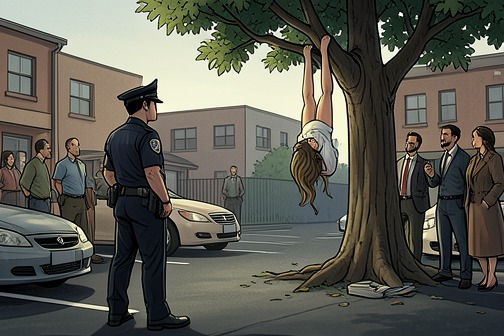
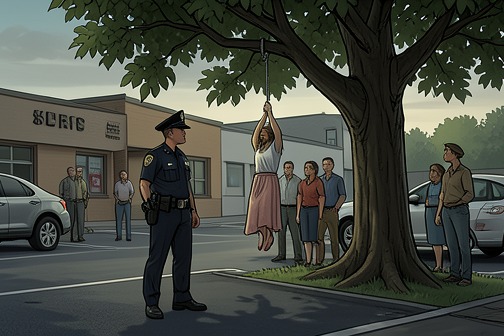
The collision left Alberte’s body so far up in a roadside tree that it was nearly impossible to see. A little more than a day after she was killed, a uniformed police officer from Nexø, Christian Habersaat, happened to look up as his car passed the tree and discovered her. The sight of her limp body, and the inscrutable expression fixed on her face, remained with him. The discovery was not simply the recovery of a victim: it became the image around which Habersaat’s lasting preoccupation with the case gathered.
The postmortem and scene evidence supported a traffic-related death, but did not produce a clear account of the impact. Alberte had fractures and internal and external bleeding. Investigators thought she had probably remained alive for some time after being thrown into the tree. Her bicycle was found some distance away in the thicket, badly mangled almost beyond recognition. Its position established that she had been cycling there, but the distance between the bicycle and the roadside tree also became an important part of later attempts to reconstruct what had happened.
## A Search Without a Lead
The initial classification rested on very slight leads. Investigators searched for skid marks but found none, and hoped that paint flakes might have adhered to Alberte’s clothes; the vehicle had apparently passed without leaving such a trace. Residents along the road were questioned. One person had heard a car travelling at terrible speed and disappearing toward the main road, but no account pointed to a particular driver or vehicle. The road was described as reasonably dry, making the absence of visible marks a question that [Carl Mørck](entity:character-recall-character-carl-m-rck-87d0acc1494d) later pressed during the review.
The police response widened beyond the immediate scene. They sought vehicles with unexplained damage to the front, monitored cars leaving by ferry for [Sweden](entity:location-recall-location-sweden-0f697902ba54) and [Copenhagen](entity:location-recall-location-copenhagen-aea5870325a0) throughout the week, and called in all twenty thousand vehicles on the island for inspection at motor-vehicle diagnostic stations in [Rønne](entity:location-recall-location-r-nne-887fc2fc5854) and Nexø. The checks caused obvious disruption, yet local people were unusually understanding and helped scrutinize passing cars. Even this extensive search produced no lead. Its scale and failure hardened the case’s defining contradiction: an impact forceful enough to throw a person into a tree, but no identifiable vehicle, driver, skid marks, or paint trace.
## Habersaat’s Reconstruction
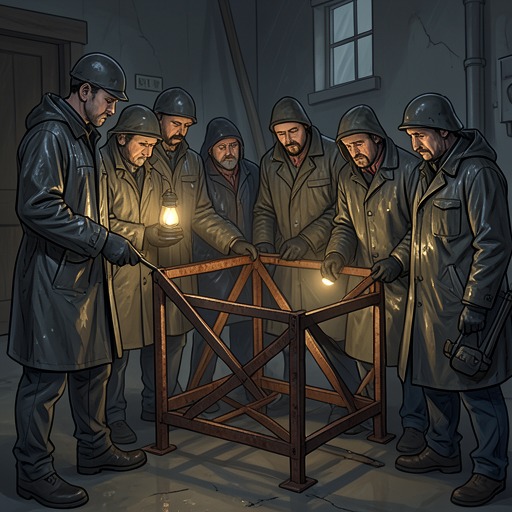
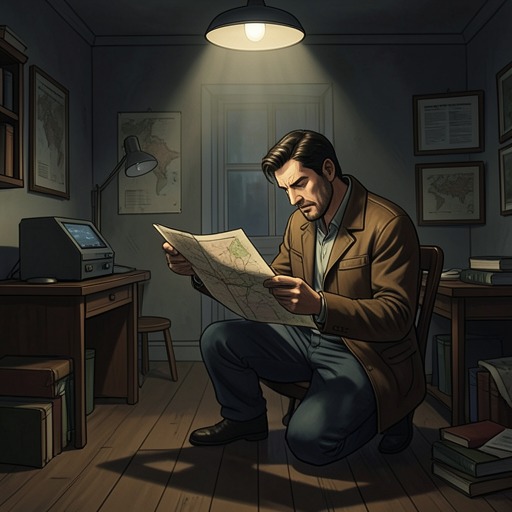
When Department Q revisited the case, Habersaat’s working material preserved details that could be compared with the official scene account. One note, in his handwriting, described a small splinter found in a straight line between the recovered bicycle and the place where Alberte was understood to have been hit. Habersaat’s papers also included a plan of the tree, the road, and the bicycle in the thicket. Carl Mørck recognized that it resembled the scene as he had imagined it; [Assad](entity:character-recall-character-assad-d8dad8cf0e48) had made a separate drawing showing a vertical section of the accident site and its surroundings. These diagrams made the spatial relationship among road, tree, and bicycle a problem that could be tested rather than merely pictured.
The splinter was identified as birch. Habersaat’s notes connected it to a board recovered from the water, describing the possibility that the splinter had peeled from an outer plywood layer over time. The proposed board was estimated to have been between twenty and twenty-four millimetres thick, with its middle eighteen millimetres still intact. But the evidence did not establish that the splinter and the recovered board came from the same object. Habersaat’s theory remained a theory, not a confirmed identification.
## Technical Findings and the Unresolved Impact
A later technical review confirmed that the splinter was plywood but rejected the recovered board as the one that had thrown Alberte into the tree. The boreholes Habersaat had described did not provide a workable way to attach that board to a vehicle such as a Kombi. Attaching it through the window-wiper channel would, according to the technicians, likely have sent both the board and the windshield flying; investigators had found no traces of either at the scene, even allowing for the possibility of a thorough cleanup. The technicians also concluded that a fender alone would not have supplied enough force to launch Alberte into the tree. Their assessment was that a properly fitted shovel blade would have been needed.
That conclusion sharpened the physical question without naming a culprit or proving how the vehicle had been altered. The board found in the water could not be treated as the instrument of the collision, and the splinter could not securely link it to the scene. Yet the estimated trajectory, the mangled bicycle, the body’s position, and the technical objection to a fender-only impact all made the original label of traffic accident feel incomplete. The hit-and-run remained both a death with a plausible broad explanation and a case whose decisive mechanism had escaped confirmation.
Event 2
Christian Habersaat's Suicide at His Retirement Farewell
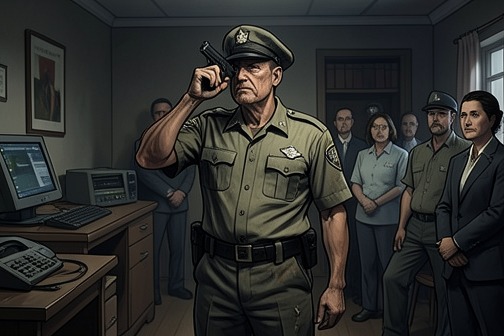
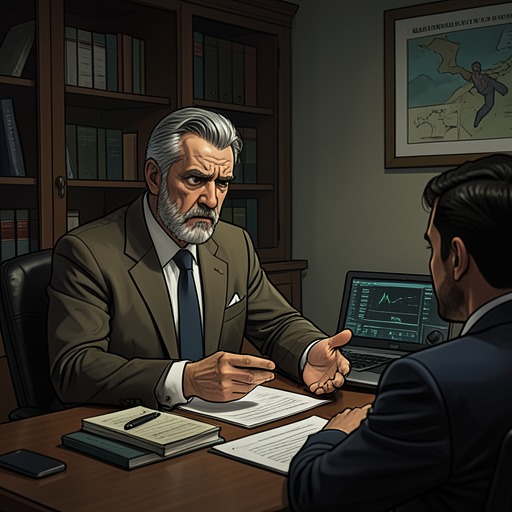
[Christian Habersaat's suicide](entity:event-recall-event-christian-habersaat-s-s-0cf73a95a4b4) at his retirement farewell in [Listed](entity:location-recall-location-listed-d7e03d9bf560) makes a public ceremony into the final scene of a long, unresolved case. Before ten shocked witnesses, the retiring police sergeant apologized for the bitterness his pursuit of [Alberte](entity:character-recall-character-alberte-ce5fb59d6bf2)'s death had brought into his life, condemned the institution he believed had failed her, and shot himself. The act forced [Department Q](entity:organization-recall-organization-department-q-6fa26a84f675) to confront the case he had asked them to take up only the day before—and had made difficult to ignore by dying in front of his colleagues.
## The farewell and its small audience
Habersaat seems to have expected more people at the reception than came. He had helped people through hard times, smoothed over injustices, and served a small community; he anticipated seeing retired colleagues from the uniformed police in Nexø and citizens he had assisted. Instead, the civic association's chair and substitute accountant, the police commissioner and his immediate subordinate, the police union representative, and the five or six people he had invited personally made up the gathering. Faced with the thin turnout, he abandoned his prepared long speech and let the occasion unfold.
He did the practical work himself, pouring white wine into plastic glasses and emptying peanuts and potato chips onto foil trays. His old near-neighbor Sam was there to film. Habersaat invited the guests to take a glass, then discreetly released the safety on the pistol in his pocket. The ordinary hospitality and the concealed preparation occupied the same brief moment: the reception was both an official farewell and a scene he had already decided would become something else.
## An apology, then an indictment
Habersaat began by thanking those who had come and recalling the calm, quiet policeman he believed they might once have known: a man able to talk down an agitated fisherman holding a broken beer bottle. The response was muted. Sam gave the camera a thumbs-up, while only one other person nodded; some of the others showed agreement with downcast eyes. The contrast between his appeal to a shared past and the room's restrained reaction sharpened the isolation of the occasion.
He apologized for being remembered as the man who had pursued a hopeless case until it tore apart his family, friendships, and happiness. He also asked forgiveness for years of bitterness and said he should have stopped when he could. The apology did not lead to reconciliation with the institution. Turning toward his superiors, he distinguished them from older colleagues, whom he blamed for giving him too little backing and for indifference toward the young woman whose case he pursued. He condemned a police system concerned, in his view, with statistics rather than getting to the bottom of things. A union representative made a quiet protest; another attendee objected to his tone. Habersaat acknowledged that the speech was unsuitable, but he had decided that it was time to end matters and make an example his colleagues would remember.
## The shooting and its immediate consequence
With his smile gone and his hand gripping the pistol inside his pocket, Habersaat pulled it out so violently that the people closest to him disappeared from his field of vision. He saw fear and horror spread across the faces of his superiors as he pointed it at them. The narration then states that he let it happen; [Rose](entity:character-recall-character-rose-154df6dd1d30)'s later report to [Carl Mørck](entity:character-recall-character-carl-m-rck-87d0acc1494d) supplies the explicit outcome: Habersaat had shot himself in the head in front of ten witnesses. The police commissioner had seen the event, and the reception's intended record, Sam's filming, gave the farewell a further witness behind the camera.
The death changed the status of Habersaat's appeal. The previous afternoon, he had spoken briefly with Carl Mørck and wanted to involve him in a case. Carl later admitted that he had probably not been receptive enough. After learning of the suicide, Carl went to [Bornholm](entity:location-recall-location-bornholm-ba560d38c175) and asked the local police to let Department Q examine the matter. His initial impulse was not to investigate why Habersaat had killed himself, but to resist Rose's insistence that they take on the case; nevertheless, Habersaat's death and his request brought the old investigation within their reach.
## The case behind the farewell
The case Habersaat called hopeless concerned Alberte, a popular young student at [Bornholm Folk High School](entity:location-recall-location-bornholm-folk-high-s-c925391e5922). [November 20, 1997](entity:time-recall-time-november-20-1997-497654dd2b0e), had seemed an ordinary day to the roughly fifty students enrolled for the winter half-year, until they learned that Alberte had been killed in a car accident that morning. She was not found until more than a day later, thrown high into a roadside tree. The person who happened to look up as his car passed was a uniformed police officer from Nexø: [Christian Habersaat](entity:character-recall-character-christian-habersaat-943273d2076f).
Later accounts show how that discovery continued to shape his work. [Inge Dalby](entity:character-recall-character-inge-dalby-4c2ce5c406b8) recalled that Habersaat repeatedly asked her about the name of a man Alberte had been seeing, although she and others had already spoken to police in [Rønne](entity:location-recall-location-r-nne-887fc2fc5854). She remembered him returning many times, apparently pressing the school community to identify someone who could have killed Alberte. Her account conveys both his persistence and its effect on those he questioned: she disliked him from the beginning and felt that he was trying to make them point to one of their own. She could not recover the man's name, only that it sounded unusual and began with something biblical.
Habersaat's pursuit had not secured the support he believed the case required, and at the reception he made that failure part of his accusation against the police. His account is his own, voiced in an emotionally charged public farewell rather than independently established as a complete explanation of the case. Still, the subsequent inquiry confirms the central connection between his death and Alberte: he had asked Department Q for help, and the people who later testified about the investigation remembered how insistently he returned to it. The farewell closes Habersaat's career, but not the question that had governed it.
Event 3
Bjarke Habersaat's suicide at home
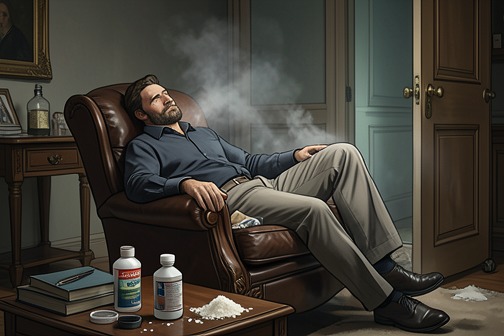
[Bjarke Habersaat's suicide at home](entity:event-recall-event-bjarke-habersaat-1029ffe9eba4) is discovered during a visit by [Carl Mørck](entity:character-recall-character-carl-m-rck-87d0acc1494d), [Assad](entity:character-recall-character-assad-d8dad8cf0e48), and [Rose](entity:character-recall-character-rose-154df6dd1d30). The scene becomes more than a death investigation when a short note addressed to his father and [June Habersaat](entity:character-recall-character-june-habersaat-fee7d618d297)'s account of their last call place the suicide within a family exchange: she had just told Bjarke about his father. The timing makes that call central to the aftermath, though the evidence does not establish what Bjarke intended or whether the news alone explains his decision.
## Discovery and circumstances
Assad stops at the doorway, and Carl understands the reason when he catches up. Inside, Bjarke is seated in a large, worn armchair, with a bottle of paint thinner nearby. He is dead, having taken his own life. The room's heavy haze initially suggests one explanation to Assad; Carl corrects him, identifying the smell as a combination of hash and cellulose thinner. The exchange establishes that the first impressions at the scene are incomplete, even as the death itself is apparent.
Rose tries to get past the two men, while Carl attempts to hold her back. Her urgency gives the discovery an immediate human dimension: the room is not only a crime-scene setting to be secured but a place where people arriving with the investigators must confront Bjarke's death. Carl then leaves Rose with the others and goes outside. His brief withdrawal precedes the practical work of the investigation, which proceeds rapidly.
## Investigation and the note
The search of Bjarke's room, the seizure of his computer and the knife connected with his death, the collection of technical data, and the postmortem and removal of the body are completed in quick succession. Carl has reached only his fifth cigarette when [John Birkedal](entity:character-recall-character-john-birkedal-51831978fc72) appears with an investigator and a technician, carrying a scrap of paper sealed in a plastic bag. Its entire message is: “Sorry, Dad.”
The note's brevity gives it force without clarifying its purpose. Carl finds the message moving in its directness, but also notices whom it does not address. He wonders why Bjarke wrote to his father rather than to his mother, especially since June was alive and could receive such a message. This is Carl's question about the note, not an explanation supplied by Bjarke: the scrap confirms an address to the father but does not reveal why Bjarke chose it, what he meant to apologize for, or how he regarded his mother at that moment.
The physical evidence and the note serve different functions in the scene. The room and the investigative procedures establish the circumstances of a death; the few words on paper open a question about family attachment that the procedures cannot settle. By preserving the message as evidence, the investigators also preserve the distinction between what can be recorded and what remains unknown.
## June Habersaat receives the news
Carl, Assad, and Rose go to June to tell her that Bjarke is dead. Carl states that her son took his own life and gives the medical officer's estimate: approximately four o'clock. June asks about the time and explains that it was just after she had called Bjarke and told him about his father. She does not offer a further account. The disclosure ties the last call to the estimated time of death, but it does not establish that June could have anticipated what followed or that the call was the sole cause.
June's response is rendered through a pause and restrained physical gestures rather than an extended explanation. She sits for a moment, strokes her arm, and struggles to respond; then she says no more. The investigators remain with her for half an hour. Rose holds June's hand until Carl signals that they can leave. The length of that visit and Rose's gesture mark a change in the investigators' role: after delivering the facts, they stay with the person whose relationship to Bjarke makes those facts personal.
## What the aftermath establishes
The episode brings together three distinct forms of evidence: the condition of the room, the medical officer's estimate of the time, and the note addressed to Bjarke's father. June's recollection adds a fourth, placing her call just after that estimated time. Together they establish a sequence, but not a complete account of Bjarke's thoughts. The narrative allows the reader to recognize the possible significance of the call while withholding any claim that the note or the timing definitively explains the suicide.
That restraint makes the message's choice of addressee especially consequential. The father receives Bjarke's only written apology, while June, who has just spoken with her son and is available to hear the news, receives no equivalent message in the evidence presented here. Carl registers the contrast, but the investigation cannot convert it into certainty about Bjarke's intentions. The scene's emotional weight therefore rests partly on what remains unanswered: a precisely timed death, a call about the father, and a note that says very little but directs attention toward him.
Event 4
Wanda Phinn's First Meeting with Atu Abanshamash Dumuzi in London
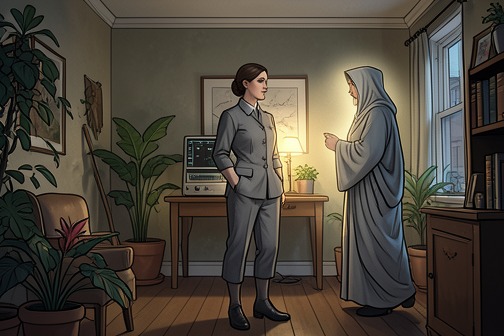
[Wanda Phinn](entity:character-recall-character-wanda-phinn-b2f5c4ae9ed5)’s first meeting with [Atu Abanshamash Dumuzi](entity:character-recall-character-atu-abanshamash-dum-7af307b1847a) transforms a modest introductory session in a Bayswater apartment into what she experiences as a personal revelation. Invited by her only friend, [Shirley](entity:character-recall-character-shirley-569eba7b10e5), Wanda encounters Atu’s promise of renewal through nature absorption; his concentrated attention leaves her fainting and, afterward, convinced that he represents the future she has dreamed of. The meeting marks a decisive turn from the constrained life she has been living toward the world of Atu’s teaching.
## Invitation and Setting
Before the encounter, Wanda’s days are defined by a grey uniform, a cap, and work in Victoria Embankment Gardens. She tries to keep her composure and recover some sense of herself, but her prospects seem poor and her life inconsequential. The wall she longs to get away from is both part of her physical surroundings and an image of the limits she feels closing around her.
Shirley, who lives two doors down and is Wanda’s only friend, offers a way out of that routine by inviting her to Nature Absorption Intro. Shirley’s interest in the occult takes many forms: she listens to spiritually inspired music, consults Polynesian kahuna fortune-telling, and turns to playing cards or tarot when making decisions. She describes these changing sources of guidance as insight. Wanda does not know exactly what Shirley means by that, but Shirley can make her smile, and the invitation offers the possibility of sharing something together. Shirley offers to pay because the price is reasonable, making the outing seem accessible as well as companionable.
The session takes place in a simple, light-filled Bayswater apartment that houses the [Nature Absorption Academy London Branch](entity:location-recall-location-72f835880f46). The setting is not a grand sanctuary, and Atu does not appear like the gurus Shirley has encountered in brochures or on television. He neither sits in lotus position nor presides from an elevated chair. Instead, Wanda sees a man of flesh and blood, smiling and engaging those gathered on the floor. The ordinary apartment and the promise of extraordinary transformation meet in the same room.
## Atu’s Teaching and Attention
Atu presents nature absorption as a practice capable of renewing the body. Its promise is not merely to make followers feel calmer: he describes a state in which every cell can resist attack and the body can seem to merge with the surrounding universe. The sun’s energy and the universe form the recurring language of his teaching. As he moves among the seated followers, he leads them in breathing and a repeated chant of his name, shaping the gathering through rhythm, voice, and attention.
He asks the followers to open their eyes and look at him, then addresses them in terms of beauty, readiness, and spiritual recognition. His light-yellow coat sleeves fan out as he stretches his arms. The gestures and words make the session personal even while he addresses the group: he moves between the participants and speaks to each man and woman individually. In this encounter, the promise of a vast unity is delivered through close attention to particular people.
When Atu reaches Wanda, he pauses and holds her gaze. He tells her twice that she is as beautiful as the sun itself, then urges her not to listen to anyone—not even him—but to listen to her own Atman, or soul, and surrender herself. The combination is striking: his teaching directs Wanda inward, toward her own authority, while his gaze and words supply the moment in which she feels that authority being recognized. The scene does not present her response as a detached judgment about doctrine. It registers first as an overwhelming bodily experience.
## Wanda’s Response and the Turning Point
The words penetrate Wanda as though they bring a long-awaited clarity. Her eyes open of their own accord; her skin burns, and her hands twitch with a cramp she associates with orgasm. Atu lowers his head and caresses her cheek. He later returns and holds his palms a few centimetres from her forehead, telling her that she has completed a first journey toward rapture and rebirth and is ready for what comes next. Wanda then faints.
The fainting is the immediate climax of the encounter, but it does not end its effect. When she comes to, Wanda remains enthralled by Atu’s eyes and remembers feeling his lips on the back of her hand. His caress, the intimate address of his calling her his flower, and the loss of consciousness become joined in her memory as parts of a single turning point. She understands the experience not as a passing spell of excitement but as recognition of a future she had already dreamed of.
That interpretation soon acquires practical consequences. Wanda does not give notice at work: she throws her cap on the floor, says goodbye to the woman at the control, and walks out. The park’s wall, the wasted days, and the sound of the park fall away from her attention as she imagines her life opening before her as one of the few chosen ones. She has a plan, and she tells Shirley about it. Shirley warns that the attractive image of buildings, rituals, and the sea may conceal the fact that Atu was merely flirting, and points out that he can attract many women. Wanda’s response to the meeting thus sets up a conflict between the future she believes Atu has offered her and her friend’s scepticism about his attention.
## Significance
The encounter’s decisive force lies in the passage from invitation to bodily crisis to life-changing resolve. Shirley supplies the social bridge into the session; Atu’s teaching gives the gathering a language of cosmic renewal; and his focused attention makes that language feel personally addressed to Wanda. Her burning skin, twitching hands, and fainting lend the promise of spiritual transformation an unmistakably physical form. The meeting begins as an inexpensive outing shared with a friend but becomes the basis for Wanda’s departure from her job and her pursuit of a place in Atu’s world.
Event 5
Alberte Goldschmid's Death in the VW Kombi Collision
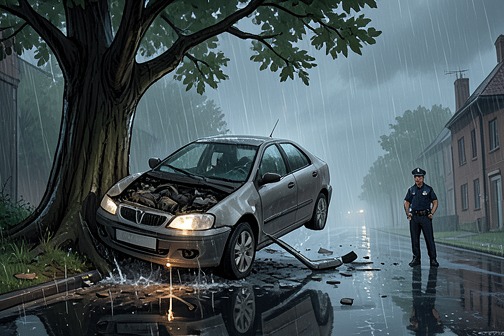
[Alberte Goldschmid](entity:character-recall-character-alberte-goldschmid-6bdc83927ee1)’s death, initially classified as an accident, becomes the decisive crime at the center of [Carl Mørck and Assad](entity:relation-recall-relation-carl-m-rck-and-assad-fb2a3d07ebd5)’s investigation when they reconstruct the collision as deliberate. Their reading of the road, the absence of skid marks, and [Alberte](entity:character-recall-character-alberte-ce5fb59d6bf2)’s position in a tree suggests that the driver saw her and accelerated into her. Yet the decisive vehicle and the driver’s identity remain unresolved: evidence points toward a specially adapted vehicle, possibly a VW Kombi, while [Christian Habersaat](entity:character-recall-character-christian-habersaat-943273d2076f)’s earlier plywood discovery never became conclusive proof.
## Background and the Accident Classification
When Carl Mørck and Assad revisit the scene, the old account of an accident still governs how others understand Alberte’s death. [Kristoffer Dalby](entity:character-recall-character-kristoffer-dalby-16dd155aeec7) insists that the incident was recorded as an accident everywhere. The contrast between that settled public description and the investigators’ new theory marks the turning point: the physical details of the road, reconsidered together, make an unintentional collision increasingly difficult to accept.
The setting gives their reconstruction its first test. From the south, the road runs roughly six hundred meters toward the bend by the old couple’s farm, then continues about one and a half kilometers toward a tree along the fields. The stretch is open and flat. Carl observes that Alberte, if she was waiting with her bicycle at the far end, could have seen an approaching car clearly for the last five or six hundred meters. The distance matters not simply as scenery, but because it bears on what the driver could have seen and how much time there was to react.
## The Reconstructed Collision
Carl tests the road by driving around the bend at speed. The tires screech, a sound he judges would have been audible inside the old farmhouse. But the recreation does not reproduce the evidence of the original collision: no skid marks resembling those made by his car were found. The absence of marks leads the investigators to conclude that the vehicle involved in Alberte’s death could not have taken the bend at the same speed. Their reconstruction instead places the acceleration after the bend.
The position of Alberte’s body strengthens that inference. Carl reasons that she stood on the side of the trees; otherwise, the impact would have thrown her in the opposite direction, away from them. From there, he argues, the driver could not plausibly claim not to have seen her. An inattentive driver might have missed the danger, [Assad](entity:character-recall-character-assad-d8dad8cf0e48) suggests, but Carl counters that Alberte could then have moved to the curb. Her failure to do so implies that she had no reason to fear the approaching person: something about the encounter may have directed her attention away from danger.
Carl imagines that Alberte and the driver made eye contact at the bend. In his reconstruction, she had left her bicycle on its prop stand and stepped toward the car, perhaps waving. He interprets her posture as expectant rather than frightened, and suggests that the driver accelerated only at the last moment, striking her and sending her into the trees. This is an investigative theory, not an independently witnessed account: the apparent welcome, the possible wave, and the timing of the acceleration belong to the scene Carl constructs from the surviving clues.
The bicycle appears to have been struck after Alberte. Assad suggests that it was hit just afterward and thrown into the air, landing farther to the right. Carl incorporates that into his sequence: the vehicle straightened after hitting Alberte, clipped the bicycle farther up the road, and continued past the yellow farm at a more ordinary speed before leaving toward Almindingensvej. The displacement of the bicycle thus becomes part of the proposed sequence, not a separate explanation for the fatal injuries.
## The Body, the Trees, and the Missing Vehicle
The investigators also account for why Alberte’s body was not initially seen during the search. Although the trees had lost their leaves by the time of the investigation, ivy or another parasitic plant covered their upper branches, making the site less obvious than a bare canopy might suggest. The trees fork into numerous strong branches, and Carl places Alberte in a lower fork about four meters above the ground, hanging head down. He supposes that she rotated in the air before coming to rest there.
Christian Habersaat had found her while driving from the direction of the main road. In Assad’s reconstruction, he approached from the side where ivy most obstructed the view, which helps explain why the body was difficult to see and why its discovery depended on Habersaat noticing it from that direction. The tree is therefore both the place where the collision’s force left Alberte and a screen that complicated the initial investigation.
The force required to propel her into the branches also suggests to the investigators that the vehicle was specially adapted. Carl notes that a snowplow could have produced such an impact, but it was not winter; he also reasons that Alberte would have moved out of the way of so large and conspicuous a vehicle. A modified vehicle offers a possible explanation for the force without resolving the question of what actually struck her. The team considers a VW Kombi and the possibility that the object that lifted Alberte could have been removed and disposed of afterward. That possibility helps explain why an unusual vehicle might not have been found in searches across [Bornholm](entity:location-recall-location-bornholm-ba560d38c175) or noticed on ferry-departure surveillance, but it remains a hypothesis rather than proof of the vehicle’s identity.
## Habersaat’s Plywood Clue
A report by Christian Habersaat, dated November 24, [1997](entity:time-recall-time-1997-83fe85347f22), records a fragment found six meters north of Alberte’s bicycle, almost in a straight line from the point where the bicycle was hit to where it landed. Technicians identified the material as birch and the glue remnants as consistent with plywood. Because no similar fragments were found in the collision area, they concluded that this piece did not come from the collision itself. The distinction is crucial: the fragment was discovered near the scene, but the first technical assessment did not connect it to the fatal impact.
Habersaat later compared the fragment with a birch board. Its thickness and layered construction led him to theorize that the fragment might have peeled from an outer layer while the board spent time in water; he estimated a board twenty to twenty-four millimeters thick, with the middle eighteen millimeters still intact. The analysis could not establish with certainty that the fragment came from that board, and Habersaat’s request for a comparison of the glue was not authorized. He nevertheless recorded his absolute theory that the board was involved in the collision, while acknowledging that flotsam was common on Bornholm and that matching wood types might be coincidence. His conviction therefore survives in tension with the limits of the evidence.
## Timing and Significance
The chronology of Alberte’s meeting with the man she may have been expecting sharpens the mystery without solving it. After speaking with a rector couple about a trip to Østerlars, Carl concludes that Alberte met the man on November 7, rather than November 11, and had known him for less than two weeks when she died. Carl wonders what she could have done to provoke a fatal end to their relationship, but the available evidence does not establish either the man’s identity or the cause of any such hostility.
The reconstruction changes the meaning of small, previously disconnected details: a clear stretch of road, a bicycle left standing, a body lodged above ground, an absent pattern of skid marks, and a fragment of birch plywood. Taken together, they lead Carl, Assad, and [Rose](entity:character-recall-character-rose-154df6dd1d30) to agree that the case must be solved and to treat Alberte’s death as murder rather than accident. But the reconstruction also preserves uncertainty. The possible meeting, the driver’s intentions, and the specially adapted vehicle are deductions of differing strength, not a complete eyewitness account. The gap between a plausible sequence and proof becomes part of the event’s continuing significance: Alberte’s death is no longer an unexplained mishap, but the deliberate act of an unidentified driver whose apparent opportunity and means still have to be established.
Event 6
Christian Habersaat’s suicide that prompted the Alberte case’s reopening
[Christian Habersaat](entity:character-recall-character-christian-habersaat-943273d2076f)’s suicide at his retirement reception becomes the shock that reopens the unresolved death of [Alberte Goldschmid](entity:character-recall-character-alberte-goldschmid-6bdc83927ee1). For years, the former local officer had pursued the case with unusual persistence, but his theories had not established who struck [Alberte](entity:character-recall-character-alberte-ce5fb59d6bf2) or why. After his death, the investigators inherit not only an old file but also Habersaat’s final, painful correction: the person responsible was his son, [Bjarke Habersaat](entity:character-recall-character-bjarke-habersaat-5e3e4758129e).
## The death that disturbed an old case
Alberte’s death had begun as a tragedy that seemed, to those around her, far removed from any warning of danger. On [November 20, 1997](entity:time-recall-time-november-20-1997-497654dd2b0e), the roughly fifty students at [Bornholm Folk High School](entity:location-recall-location-bornholm-folk-high-s-c925391e5922) were passing an ordinary day of courses in music, glasswork, painting, and pottery. They did not yet know that Alberte, remembered as gentle, beautiful, and popular, had been killed in a traffic collision that morning. More than a day passed before she was found high in a roadside tree. The person who looked up and saw her was Christian Habersaat, then a uniformed officer from Nexø.
The discovery tied Habersaat personally to the case. He continued to pursue it long after the initial investigation had settled on a hit-and-run, repeatedly returning to witnesses and pressing for more answers. The records later examined by [Carl Mørck](entity:character-recall-character-carl-m-rck-87d0acc1494d) showed that the files had not been updated since 2002, and that investigators had never formally considered premeditated murder. Police in [Rønne](entity:location-recall-location-r-nne-887fc2fc5854) had agreed on the hit-and-run theory, but had not identified either the vehicle or its driver. Habersaat’s persistence had narrowed the inquiry in some ways, yet it had not made his conclusions reliable: the reopened investigation had to distinguish his investment in the case from evidence that could be tested.
## A difficult legacy among witnesses
Habersaat’s determination left a divided impression. One witness recalled that he repeatedly visited the school, trying to get its people to identify someone among them as Alberte’s killer; when his questions produced nothing, he returned again and again. [Inge Dalby](entity:character-recall-character-inge-dalby-4c2ce5c406b8) likewise remembered that he had asked her many times about a man Alberte had been seeing. She could recall only that Alberte had once mentioned an unusual-sounding name, apparently from [Copenhagen](entity:location-recall-location-copenhagen-aea5870325a0), and that the man had a Volkswagen. When shown a photograph, she could say only that the vehicle seemed to have a similar color and shape. Such fragments kept the case alive, but years of repetition did not turn uncertain memories into a confirmed identification.
Habersaat’s personal relationships further complicated the picture. Inge Dalby spoke with hostility about both him and the renewed attention to Alberte, while insisting that her feelings were not what Habersaat had believed. Another acquaintance described Habersaat as difficult to befriend in his later years; playing cards with Uncle Sam seemed to be about the extent of their connection. These recollections depict a man whose case had become a persistent presence in other people’s lives, but who was not necessarily trusted or understood by them. His death therefore generated fresh attention without making his old methods or assumptions automatically persuasive.
The question of the pistol also returned after the suicide. A later report, passed along through a relative of a teacher who had died at the school, held that the teacher had owned two nearly identical pistols. Habersaat had obtained one and used it to kill himself; the other had not been found among his possessions. The detail raised a question about the weapon’s history, but it did not by itself explain the suicide or establish a connection to Alberte’s death. Carl initially regarded the distinction between one pistol and another as beside the point: his concern was the cold case, and [Rose](entity:character-recall-character-rose-154df6dd1d30)’s belief that he owed Habersaat a full investigation of the suicide was not his understanding of why they had come.
## The case reopens
Despite Carl’s reservations, Habersaat’s death changed the case’s standing. Carl and his colleagues took up the investigation, established a situation room in the basement of Police Headquarters, and brought Alberte’s parents up to date, beginning with the suicide. For the Goldschmids, Habersaat had brought sorrow as well as renewed attention to their daughter’s death; the investigators had to explain that they wanted to build a fuller account of Alberte, not simply continue Habersaat’s pursuit of a suspect.
That distinction matters because the inherited investigation contained both valuable effort and unresolved error. Habersaat had devoted time and energy to the hit-and-run theory, but the local police had never found the vehicle or driver, and no premeditated-murder theory had entered the official inquiry. The old case therefore reopened in an uneasy double light: Habersaat’s persistence had prevented it from disappearing entirely, while his manner and unverified suspicions had made people wary. The new inquiry could not treat his conviction as proof; it had to revisit the witnesses and clues without assuming that his preferred explanation was right.
## The final letter and reversal
The decisive change comes with Habersaat’s written account, dated [April 29, 2014](entity:time-recall-time-april-29-2014-ce7bdf30437a). He acknowledges that he had been determined to pin the crime on an innocent man, and apologizes for the harm implicit in that insistence. He then leaves the investigators to decide what should happen next, explaining that he cannot bring himself to pursue his own son. The letter identifies Bjarke Habersaat as the person who killed Alberte.
This admission transforms the meaning of Habersaat’s long attachment to the case. He had not simply failed to solve it: by the end, he understood that his effort to accuse someone else had obscured the truth closest to him. His decision to leave the matter to the investigators marks the limit of what he could do as a father and as a former officer. The date on the letter fixes that final confession in the very period when the case was being taken up again, making it both an apology for the past investigation and a handover of its unresolved consequences.
## Significance
Habersaat’s suicide is the hinge between a case treated as an unsolved hit-and-run and an inquiry that must confront the possibility of murder within his own family. It prompts renewed scrutiny of Alberte’s death, brings the old files and witness memories back into circulation, and gives the investigators a confession that corrects Habersaat’s earlier accusations. Yet the correction arrives through a man who is no longer available to explain or pursue it. His final act does not settle the case by itself; it leaves the truth, and the fate of his son, in the investigators’ hands.
Event 7
Reopening of the Alberte Goldschmid Case
The reopening of the [Alberte Goldschmid](entity:character-recall-character-alberte-goldschmid-6bdc83927ee1) case turns a death long treated as an unresolved traffic accident into an active investigation of possible murder. [Department Q](entity:organization-recall-organization-department-q-6fa26a84f675)’s review exposes gaps in the original inquiry, tests [Christian Habersaat](entity:character-recall-character-christian-habersaat-943273d2076f)’s persistent theories against physical evidence, and shows how the case’s history has been shaped by imperfect recollection as well as by the material left at the scene.
## The [1997](entity:time-recall-time-1997-83fe85347f22) Death and the Dormant Investigation
On [November 20, 1997](entity:time-recall-time-november-20-1997-497654dd2b0e), life at [Bornholm Folk High School](entity:location-recall-location-bornholm-folk-high-s-c925391e5922) appeared ordinary to its roughly fifty winter-term students, who were taking courses in music, glasswork, painting, or pottery. They did not yet know that Alberte Goldschmid had been killed in a collision that morning. More than a day passed before she was found, thrown high into a roadside tree and nearly impossible to see. The person who happened to look up as he drove past was Christian Habersaat, then a uniformed police officer from Nexø.
The postmortem indicated fractures and internal and external bleeding. [Carl Mørck](entity:character-recall-character-carl-m-rck-87d0acc1494d) asked whether [Alberte](entity:character-recall-character-alberte-ce5fb59d6bf2) might have been alive for some time after being hurled into the tree, and questioned whether the injuries and scene findings established a traffic death beyond doubt. Her bicycle was discovered some distance away in the thicket, mangled almost beyond recognition. Investigators had found no meaningful skid or tire marks; the road had reportedly been reasonably dry. The scene offered physical clues, but not an identified vehicle or driver.
The case did not remain under active review. Department Q learned that the files had not been updated since 2002 and that investigators had never seriously considered premeditated murder. [Bornholm Police](entity:organization-recall-organization-8249ca61dcad) had settled on a hit-and-run theory but could not pinpoint the vehicle or its driver. Habersaat’s persistence and substantial investment of time had directed the inquiry toward a more specific possibility, but his conviction was not proof that he was right. The failure to bring in a mobile task force, and the possibility that Habersaat’s forceful manner pushed others away, left the original theory without a strong independent challenge.
## Department Q Takes Up the File
Habersaat’s suicide gave the case a new point of entry. When Carl, [Assad](entity:character-recall-character-assad-d8dad8cf0e48), and [Rose](entity:character-recall-character-rose-154df6dd1d30) visited Alberte’s family, they explained how Habersaat’s death had led to a situation room in the basement of Police Headquarters. Their stated purpose was to build a fuller picture of Alberte, though they knew that discussing her could be painful. The reopening therefore joined two unresolved histories: the death of Alberte and the obsessive investigation that had occupied Habersaat.
Carl tried to move the inquiry beyond internal review by asking the chief of homicide for permission to seek information about a man pictured beside a [VW Kombi Van](entity:object-recall-object-vw-kombi-3b29971076be) on TV2’s Station 2. He described the man as a likely killer and said Department Q intended to pursue murder or manslaughter and hit-and-run until someone was held responsible. The chief refused. He argued that the man had never been charged, that the photograph could depict anyone, and that a public appeal would generate useless calls and waste police time. He also warned of the risk of compensation claims if the media wrongly implicated someone. Carl left without permission, making clear that the department’s reopening would proceed despite resistance from above.
## Witness Memories and the Suspected Man
The inquiry had to work with memories formed long before the interviews. [Inge Dalby](entity:character-recall-character-inge-dalby-4c2ce5c406b8) recalled that Habersaat had questioned her repeatedly about a man Alberte had been seeing. Alberte had once mentioned his unusual-sounding name, which Inge remembered only as a combination of several names, beginning with a shorter, biblical-sounding one. Inge also remembered that he came from [Copenhagen](entity:location-recall-location-copenhagen-aea5870325a0) rather than [Bornholm](entity:location-recall-location-bornholm-ba560d38c175) or Jutland, and that he had a VW. When shown a photograph, she recognized a similar color and shape but could not identify the vehicle clearly.
Inge’s recollection also conveyed the pressure of Habersaat’s inquiries. She said that she had things she could have told him but had not. She remembered disliking him from the beginning, and believed he repeatedly tried to get people at the school to identify someone among them as responsible for Alberte’s death. Such testimony helps explain both the persistence of the investigation and the limits of its evidence: a witness’s remembered details may preserve a lead, but they do not by themselves establish a name, a vehicle, or a crime.
Later testimony gave the relationship between Alberte and the man a more specific shape. [June Habersaat](entity:character-recall-character-june-habersaat-fee7d618d297) said she had discovered that Frank was seeing Alberte while also involved with her. She described following him and seeing the pair leave notes for one another by a boulder outside the school; she and Frank had also exchanged notes, but in a different place. June said she confronted Frank at the commune at [Ølene](entity:location-recall-location-lene-52b2176d6bc4), where he told her he loved Alberte and intended to take her back to Copenhagen. Her account supplied a motive for her hostility toward both of them, while also making clear that its force came from a participant’s retrospective testimony, not from the collision scene itself.
## Physical Evidence and Changing Hypotheses
The old file preserved Habersaat’s attempt to reconstruct the impact. Among the papers was a short wooden splint, taped to a sheet in his handwriting, which he had placed in a straight line between the recovered bicycle and the apparent point of impact. His records described the material as birch and considered whether the splint had peeled from a larger plywood board after time in the water. Although the analysis could not establish that it came from the same board, the estimated original thickness was between 20 and 24 millimeters, with the middle 18 millimeters still intact.
A plan drawn by technicians mapped the tree, the road, and the bicycle in the thicket. Assad also prepared a vertical-section drawing of the site, turning the old scene into a problem of position and trajectory rather than relying only on the original classification. Carl’s questions about the direction in which Alberte’s body had been thrown, broken branches, the body’s position in the tree, and the bicycle’s location all reflected the need to test the proposed impact against observable traces.
Renewed technical examination then weakened one of Habersaat’s material theories. Technicians confirmed that the recovered splinter was plywood, but concluded that the board found in the water was not the board that had thrown Alberte into the tree. The described boreholes could not plausibly have fastened that board to the VW Kombi Van; the suggested attachment points would not fit the observed absence of debris from a shattered windshield or board. The technicians also judged that a fender alone could not have launched Alberte into the tree: the force would have required a properly aligned shovel blade. The reopening thus did not simply ratify Habersaat’s suspicions. It used them to frame testable questions, then revised the reconstruction when the examinations did not support his proposed link.
## Significance of the Reopening
The case’s return to active investigation is marked by a tension between what the records suggest and what they can prove. Alberte’s death had been treated as a hit-and-run, yet neither the vehicle nor its driver had been found; Habersaat had pursued the possibility of a more deliberate act, but his commitment could not substitute for corroboration. Witnesses retained fragments of names, cars, conversations, and secret notes, while technical examination could rule against a proposed board without identifying who had caused the collision.
By reopening the file, Department Q challenges the finality of the old classification without presenting every inherited clue as reliable. The investigation’s progress depends on putting remembered accounts beside preserved documents and testing both against the scene’s physical constraints. The unresolved distance between a plausible reconstruction and a proven perpetrator is not a side issue: it is the central condition under which the old case becomes new again.
Event 8
Pirjo's Pursuit and Murder of Wanda Phinn
[Pirjo](entity:character-recall-character-pirjo-a806ff3176e3)’s pursuit and murder of [Wanda Phinn](entity:character-recall-character-wanda-phinn-b2f5c4ae9ed5) grows out of Pirjo’s determination to prevent Wanda from reaching Atu and voicing her suspicions. What begins as an attack staged to look like a fall fails almost immediately; Pirjo then pursues Wanda and kills her, before returning to the [Nature Absorption Academy](entity:location-recall-location-nature-absorption-ac-6e3eeffd9c78) to conceal the crime and protect her position.
## Causes and First Attempt
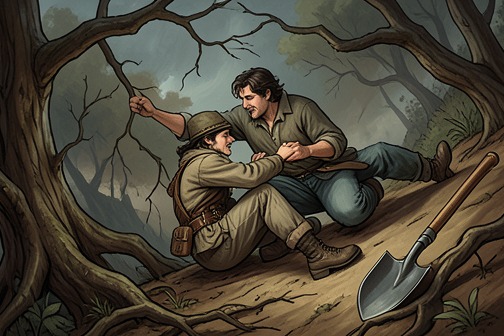
On the deserted road, Pirjo takes Wanda’s calm manner as the opening she needs. She talks about [Öland](entity:location-recall-location-land-9a789f8dc32f)’s history of hunger, blaming the inhabitants’ failure to work together in a fertile place, while pulling Wanda’s arm and driving her hip against Wanda’s lower back. The attack is meant to send Wanda down the slope among vegetation, stumps, and rocks, where a fatal fall might appear accidental; Pirjo also has a spade as a backup. But Wanda, losing her balance, instinctively grabs Pirjo around the waist. They tumble down together and come to rest entangled on the slope before it steepens. Wanda catches hold of branches and roots, then challenges Pirjo over whether she is trying to kill her. The attempt has not only failed; it has made Wanda alert to the danger. Pirjo recognizes that Wanda may now warn Atu, the person she most needs to keep uninformed.
## The Pursuit and Killing
Later, Wanda waved to Pirjo, who did not wave back. Wanda briefly mistook Pirjo’s silence for helpless uncertainty, feeling a moment of compassion for her. When they were about twenty meters apart, however, Wanda saw Pirjo’s face and understood that she knew exactly what to do. Wanda’s pulse raced as she realized Pirjo meant to kill her, and she ran.
The ground quickly turned swampy, but Wanda kept moving as the scooter closed in. She jumped aside at the last moment, and Pirjo roared past; Wanda saw frustration in her expression, but also a cold determination that nothing would stop her. Pirjo spun the scooter around, its rear wheel throwing up mud and earth. Wanda slipped out of her shoes and ran barefoot, while Pirjo assumed the scooter would let her catch up easily.
As the scooter reached her again, Wanda turned and jumped aside for a second time. Pirjo swung a compact spade at her face. That was the last thing Wanda saw.
## Concealment and Aftermath
After the blow, Pirjo returned to the Academy’s [Stable of Senses](entity:location-recall-location-stable-of-senses-7a59d69eefdc) and methodically washed her boots, then hosed mud from her trouser legs, the spade, and the scooter. Around her, the stable served a gentler institutional purpose: new disciples went there to stroke the ponies and breathe in the straw and horse-dung smells when they needed to unburden themselves. At that hour, however, the others were meditating in their rooms, leaving Pirjo alone to clean up. The contrast between the stable’s language of release and the practical work of hiding a killing makes the Academy’s spiritual setting part of the crime’s concealment, not an interruption of it.
Pirjo told herself to stop, think, and treat the murder as insignificant in the larger scheme. Only an hour earlier, she had killed someone for the third time in her life; her forearms were bright red and her heart was still pounding. She rationalized the killing as necessary to preserve her standing beside Atu: in her account, Wanda had forced her way into Pirjo’s world despite warnings, and the high priestess had acted to stop her. Pirjo acknowledged that each killing disturbed her inner peace, but folded even that cost into the Academy’s spiritual vocabulary. Her immediate practical fear was that Atu might discover what she had done.
Replaying the scene in her mind, Pirjo concluded that the body would not be found soon, if ever. She had left it naked in a remote part of [Stora Alvaret](entity:location-recall-location-stora-alvaret-69b119fcd346). Beneath the deepest puddles, the ground had been soft enough for her to dig a grave deep enough not to be exposed by a downpour. She had erased tracks that might lead a botanist or tourist away from the beaten path and toward the grave, and believed no one had seen her there or watched her drive away. Each completed precaution offered a check against discovery, though she knew the Academy’s security cameras could record her absence and her movements after she returned.
The evidence she still had to dispose of was divided into two groups. Wanda’s skirt, blouse, underwear, two-tone belt, scarf, stilettos, coat, and stockings were waiting in a removal box in the storage loft, among clothes discarded by Academy members; Pirjo intended to burn them when she had a better opportunity. Wanda’s handbag and its contents demanded more immediate attention: makeup, condoms, a cell phone, keys—including the key to her luggage box at the station—several hundred euros, travel documents, and her passport. The luggage-box key and identity papers connected the concealed body to a life beyond the Academy, making the remaining belongings a continuing risk.
Pirjo also considered how readily Wanda might disappear without prompting a search. Wanda had written in her application that she had emigrated from Jamaica, left her job, and rented a room on [London](entity:location-recall-location-london-420923d4a60a)’s outskirts, a life she wanted to leave behind. She had cancelled her subscriptions, including the Internet, and sold her computer, radio, television, furniture, and most of her clothes. She hoped to complete the introductory course and become a permanent resident at the Academy. Those details explain both why Wanda had come within Pirjo’s reach and why Pirjo could imagine that her absence might go unnoticed: Wanda had already severed many of the ordinary ties that might have brought someone looking for her.
## Narrative Significance
The episode turns concealment into a second stage of the crime. Pirjo’s first plan depends on making Wanda’s death resemble an accident, but Wanda’s grasp at her waist converts that staged fall into a warning and forces Pirjo into pursuit. Afterward, Pirjo’s orderly inventory of precautions cannot restore control: the cameras she helped install may preserve a record of her absence, while Wanda’s belongings remain unresolved evidence. The sequence also exposes the gap between the Academy’s language of inner balance and Pirjo’s conduct. She describes killing as necessary to preserve her place beside Atu, then tries to manage its consequences through cleaning, burial, and a checklist; the practical details reveal how completely spiritual justification has become entangled with self-protection.
Event 9
Malena's Miscarriage and Hospitalization
[Malena](entity:character-recall-character-malena-d9d69fd03c36)’s miscarriage and hospitalization become a turning point in the conflict among Malena, [Pirjo](entity:character-recall-character-pirjo-a806ff3176e3), and Atu. The pregnancy ends amid uncontrollable bleeding, and Malena is taken to [Kalmar](entity:location-recall-location-kalmar-8a99e09f4567) Hospital. Her loss is not only a medical crisis: it sharpens Pirjo’s fear that Atu may father a child with another woman, while Pirjo’s visit to the hospital turns apparent sympathy into an effort to remove Malena from the academy.
## The News and Pirjo’s Reaction
Atu tells Pirjo that Malena miscarried a few hours earlier and that she had bled uncontrollably. He also reproaches Pirjo for not being there when he needed her and says she should have accompanied Malena in the ambulance. His account places Pirjo’s absence alongside the immediate crisis: while Malena required urgent care, Pirjo was away from the academy, and Atu had expected her support.
Pirjo reacts first with disbelief. The news makes her consider whether Atu has impregnated Malena, or whether he might have impregnated Pirjo herself. The possibility does not remain an abstract question for her. She sees the pregnancy as a threat to a future she wants to claim with Atu: her own child should be his successor, and, in her private conception of the academy’s destiny, a new savior. The loss therefore brings relief from one immediate rival possibility, but it also makes Pirjo’s own desire and anxiety newly urgent. She concludes that she can no longer accept sharing Atu while her fertility declines and time seems to be running out.
That response contrasts with the practical emergency Atu describes. Malena’s bleeding has made the situation serious, but Pirjo’s thoughts turn quickly toward succession, possession, and her own chance to bear Atu’s child. When Atu repeats that Malena bled uncontrollably, Pirjo composes herself and tries to appear neutral. Her outward restraint conceals the force of what the news has stirred in her.
## Malena in Hospital
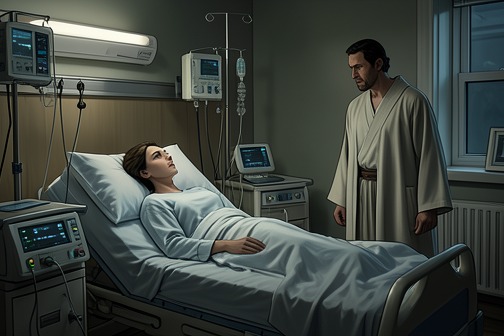
Pirjo later appears at the end of Malena’s bed in the gynecological ward on the fourth floor of Kalmar Hospital. Malena looks extremely pale against the nurses’ white coats and the ward’s sterile surroundings. Her condition has improved: the bleeding stopped the previous night, and she expects to be discharged later that day. The immediate danger has subsided, but she is still in hospital after a severe loss, and the visit does not offer uncomplicated comfort.
Pirjo asks how she is and takes her hand. Malena twitches with discomfort and tries to pull away, but Pirjo holds on. The gesture makes the tension physical before Malena names her suspicion: she wants to know why Pirjo has come and whether she has come to gloat. Her distrust is grounded in their antagonism, and Pirjo’s carefully measured expression does little to dispel it.
Pirjo denies that she is pleased and presents herself as genuinely sorry. She lets her head dip, presses her lips together, looks away, and then releases Malena’s hand after a pause. These gestures give her performance the shape of concern, but the narration makes clear that she is managing Malena’s impression of her. Sympathy is not the visit’s real purpose.
## The Offer and the Refusal
Pirjo tells Malena that she needs to go as far away as possible once she is discharged. She has already packed Malena’s belongings, leaving the suitcase in the corridor, and produces eight thousand euros from her purse. She presents the money as enough to keep Malena financially secure for a few months. The offer is concrete and substantial, but its condition is unmistakable: Pirjo wants Malena to leave.
Malena pushes the money away. She recognizes the offer as an attempt to get rid of her and refuses to accept that Pirjo can decide her future so easily. She insists that she will return to the center within hours and resume the position she has fought to attain. She also asserts that Atu belongs with her and claims that he told her he wanted nothing to do with Pirjo, whom he treated as a subordinate. That account is Malena’s claim in the confrontation, not an independently established description of Atu’s feelings.
The refusal changes the encounter from a private arrangement into an open contest over belonging and authority. Malena does not let the money purchase her departure, and her stated plan to return puts her directly back in the environment Pirjo is trying to control. Her recovery from the bleeding does not resolve the interpersonal conflict; it gives her the immediate prospect of re-entering it.
## Consequences and Significance
The hospital scene shows how the miscarriage reorganizes the women’s struggle without settling it. For Pirjo, Malena’s pregnancy has made her fear that Atu’s attention and the future she imagines may be shared with another woman. She responds by trying to turn Malena’s vulnerability and impending discharge into an opportunity for removal. The money and packed suitcase make that strategy visible, even as Pirjo disguises it with concern.
Malena, meanwhile, refuses the role Pirjo has prepared for her: a patient who accepts assistance and disappears. She rejects the payment, challenges Pirjo’s motives, and declares that she will return to the center. The episode thus binds a bodily crisis to a struggle over place, status, and access to Atu. Malena’s loss is real, but it does not make her compliant; Pirjo’s performance of compassion cannot conceal that her desired outcome is Malena’s departure. The encounter leaves the conflict active at the moment Malena is due to leave hospital.
Event 10
Alberte Goldschmid's Death from Collision Injuries

[Alberte Goldschmid](entity:character-recall-character-alberte-goldschmid-6bdc83927ee1)’s death is presented as a collision whose consequences unfolded over time, rather than as an instantly fatal impact. The autopsy and the investigators’ reconstruction establish that she survived the collision and died later from the combined effects of her injuries and the time she remained suspended in a tree. Yet the physical evidence does not settle every aspect of how the collision was carried out: [Christian Habersaat](entity:character-recall-character-christian-habersaat-943273d2076f)’s theory gives the investigators a testable account, and subsequent analysis both supports parts of the reconstruction and rules out a crucial proposed object.
## The disputed classification
The investigation begins by treating the description of [Alberte](entity:character-recall-character-alberte-ce5fb59d6bf2)’s death as traffic-related as a question, not an unquestionable conclusion. [Carl Mørck](entity:character-recall-character-carl-m-rck-87d0acc1494d) asks whether the postmortem and the collision scene can establish that she died in a traffic incident, or whether another explanation remains possible. His attention to the lack of leads is practical: investigators might expect skid marks or at least tire marks, and he asks whether rain could have affected what was left behind. The questions keep the scene’s absences in view alongside its positive evidence.
That uncertainty shapes the case’s method. The investigators are not simply looking for an object that proves a theory; they are comparing the injuries, the position of the bicycle, Habersaat’s records, and material recovered from the area. A plausible account must explain how Alberte was moved, what happened to the bicycle, and why the expected vehicle traces did not produce straightforward leads. The scene remains open to scrutiny even after the cause of death is described as collision-related.
## What the autopsy establishes
The postmortem, as reported to the investigators by [John Birkedal](entity:character-recall-character-john-birkedal-51831978fc72), confirmed fractures and internal bleeding. The injuries were serious in combination, but the examination did not identify a single one as independently sufficient to cause death. That distinction changes the reconstruction: the fatal process cannot be reduced to one decisive injury at the instant of impact.
Carl’s account of the findings is that Alberte was still alive when the collision threw her into the tree and remained alive for a considerable period afterward. The injuries and her position there together form the explanation for her death. The report therefore supplies both a sequence and a limit: it establishes survival after the impact and a delayed death, but does not make any single injury the whole cause.
Carl summarizes the outcome as a collection of injuries, together with the time she remained in the tree. His response also marks the human consequence of the forensic detail: Alberte had been there for a long time before she died. The scene is not merely a diagram of impact and movement; the interval between collision and death is part of what the evidence makes visible.
## Habersaat’s reconstruction and its traces
Christian Habersaat’s notes and drawings give the investigation a proposed spatial sequence. One notation places a splint in a straight line between the bicycle recovered in a thicket and the point where accounts said the collision occurred. The notation is in Habersaat’s handwriting. A separate plan depicts the tree, the road beside it, and the bicycle in the thicket; Carl remarks that its precision suggests that technicians, rather than Habersaat himself, may have made it.
The drawing matters because it connects separate locations into a reconstruction, not because it independently proves every part of that reconstruction. Habersaat’s account proposes that a board fitted with a shovel blade was involved in throwing Alberte into the tree. In response, Carl asks the technicians to revisit their archived analysis of the wooden material and assess whether a board of the required thickness could have survived the collision. He also asks whether such a board could have been secured to the hood of the pictured [VW Kombi Van](entity:object-recall-object-vw-kombi-3b29971076be) without leaving marks on the vehicle.
## What the material tests leave unresolved
The splinter and the board found in the water initially invite comparison, but the evidence does not establish that they came from the same board. Although the material was identified as birch, the earlier analysis could not determine a common origin. Later, after the technicians retrieved the archived examinations, they identified the splinter as plywood and concluded that the board recovered from the water was not the one that had thrown Alberte into the tree.
The technical review also challenges the proposed attachment method. The boreholes Habersaat described could not, by themselves, have secured the board to a vehicle like the VW Kombi Van. Hooks through the holes might be imagined as an alternative, but that possibility creates another problem: if the hooks had been attached in the furrow beneath the windshield wipers, the impact should have thrown both the windshield and board away, and the technicians would have expected to find traces. The tests thus narrow the viable reconstruction without supplying a complete alternative.
The death is consequently more firmly explained than the apparatus behind it. The autopsy establishes that Alberte survived the impact and later died from combined injuries and elapsed time; Habersaat’s plan and notation preserve a proposed path between collision point and bicycle; and technical analysis rules out the board recovered from the water as the object involved. The remaining gap between a coherent reconstruction and demonstrable mechanism keeps the collision open as an investigative problem, even as the medical evidence clarifies how Alberte died.
Event 11
Malena flees the academy after her miscarriage
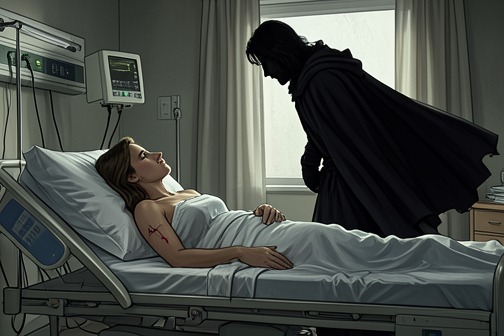
[Malena flees the academy after her miscarriage](entity:event-recall-event-fd41599ccf52) because [Pirjo](entity:character-recall-character-pirjo-a806ff3176e3) convinces her that returning could cost her life, then secretly gives her time to disappear. The escape depends on a sharp reversal: Pirjo presents herself to [Malena](entity:character-recall-character-malena-d9d69fd03c36) as a warning ally, but goes back to Atu and hides Malena’s recovery and departure from him.
## The warning in the hospital
Malena is still in a hospital bed when Pirjo tells her that her miscarriage is not an isolated loss in Atu’s life. She says Malena is the third woman whose pregnancy with him has ended in miscarriage; the other two are dead, and Atu, now over forty and without children, wants children more than anything. Pirjo describes him as devastated and angry, and says he feels let down and betrayed. These are Pirjo’s claims, not independently established facts in the scene, but they give Malena a frightening interpretation of her own miscarriage: to Atu, Pirjo says, it has opened an abyss of negative energy that he cannot tolerate.
Malena initially challenges the warning rather than accepting Pirjo’s account. She says Atu can tell her himself, and mocks the idea that he would sacrifice her. Pirjo answers by making the danger specific: if Malena returns to the center, Atu will drown her, as he supposedly did the other women who lost his offspring. She predicts that Malena will be found naked and bloated on a distant beach. Pirjo adds that one of the women, Claudia, was found on the Polish coast. The detail gives the threat a geographical reach beyond the academy and makes Pirjo’s account more concrete, while leaving its truthfulness uncertain.
## Fear becomes an opening for escape
Pirjo’s warning is calculated to unsettle Malena. The narration makes clear that the words produce both doubt and shock, followed by powerlessness and fear; Pirjo has succeeded in making her intended impression. The scene’s turning point is therefore not a physical struggle but a change in what Malena believes is safe. She may still distrust Pirjo, yet the possibility of being killed if she returns becomes serious enough to alter her choices.
Pirjo’s intervention also complicates the apparent alliance between the women. She presents her closeness to Atu as the reason she can recognize his dark side, and insists that her affection for him has changed into something she accepted long ago. That account gives her warning an air of painful candor. But the later sequence shows that she is also managing what Atu knows: after persuading Malena to stay away, Pirjo returns to the center and tells him that Malena is recovering and will be discharged in a day or two. The lie supplies Malena with a head start. The text calls Pirjo’s visit a successful mission, confirming that the warning serves a practical purpose as well as expressing concern.
## Disappearance and aftermath
Malena never returns to the center. Atu cannot obtain answers about why she has left the hospital or where she has gone, and spends several weeks trying to find her through his contacts. She seems to have vanished without a trace. The account does not disclose Malena’s destination or describe her journey; its emphasis is on the absence she leaves behind and on Atu’s inability to explain it.
Pirjo offers Atu a different explanation, citing the depression that can follow miscarriage and the irrational decisions a woman might make after such a severe experience. He listens, sad and disheartened, and eventually resigns himself to that account. Her deception thus holds: the danger Pirjo described to Malena is never confronted by Atu, while he is given a plausible explanation for her disappearance that does not expose Pirjo’s role.
The aftermath shifts back to Pirjo and Atu. One morning, after Atu has gone out early as usual to chant while looking out to sea, Pirjo brings him warm tea and a damp cloth. Without speaking, she washes and massages him, removes his trousers, and straddles him. The sequence follows Malena’s disappearance with a new intimacy between Pirjo and Atu, but does not establish that this was the purpose of her warning. What it does show is the changed situation Pirjo has helped create: Malena is gone, Atu has accepted an explanation for her absence, and Pirjo is again physically close to him. Escape brings Malena out of immediate reach, while leaving the account of Atu’s alleged violence unresolved.
Event 12
Pirjo Becomes Pregnant and Tells Atu
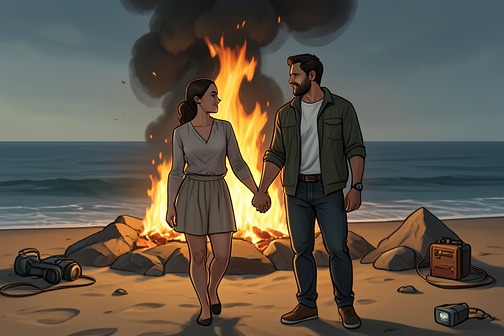
[Pirjo](entity:character-recall-character-pirjo-a806ff3176e3)’s pregnancy and her New Year’s Eve announcement to Atu mark the realization of a long-held desire: after years of longing, she believes she will bear his child and that he welcomes the news. The moment is both intimate and public in its consequences. Conceived in a private encounter, the pregnancy becomes something Pirjo deliberately carries through her ordinary work and the Academy’s communal rhythms before she tells Atu, hand in hand beside the beach fire.
## The Encounter and Pirjo’s Longing
At the time, [Malena](entity:character-recall-character-malena-d9d69fd03c36) had disappeared after leaving the hospital, and Atu had spent weeks trying unsuccessfully to find out where she had gone. Pirjo, who had spoken with him about the depression and irrational decisions that could follow a miscarriage, found him one morning chanting while looking out to sea. She brought warm tea and a damp cloth, washed and massaged him, then took the initiative in their sexual encounter. The narration leaves the immediate cause of Atu’s willingness open: surprise, Pirjo’s scent, or a sense that he owed her might each have contributed. What it makes plain is the contrast between her decisive action and his eventual surrender to the moment.
For Pirjo, the encounter carries a force beyond sexual fulfillment. Atu looks directly into her eyes, and she trembles; the narration describes years of deprivation releasing in the look she returns to him. That response gives the pregnancy its emotional history. This is not a sudden wish born only from a positive test: Pirjo has long wanted to be the woman who bears Atu’s child. The possibility that she is pregnant joins that accumulated longing to a bodily fact she can investigate.
## Confirmation and Private Preparation
Pirjo knows her menstrual cycle and ovulation to be regular, and she recognizes that her missed periods might have more than one explanation. She has read about the effects that simply desiring pregnancy can have on the body, so she does not treat hope alone as proof. Near [Christmas](entity:time-recall-time-0cffe7da2c4d), she buys a test at a pharmacy; its positive result almost makes her faint. Even then, she wants a doctor’s opinion and guidance about precautions. At thirty-nine, she regards medical confirmation and the practical questions of pregnancy as important, not incidental.
She returns from the same gynecological ward where Malena had been treated two months earlier, this time with deep happiness. The shared location places Pirjo’s news beside Malena’s recent miscarriage without making their experiences equivalent: Malena’s disappearance had left Atu grieving and searching, while Pirjo now carries a pregnancy she has long desired. Pirjo is sure Atu will be surprised but happy. In her own understanding, she has already proved herself worthy of bearing his child and possessing the necessary genes. That conviction reveals how closely she connects pregnancy not just to intimacy, but to her place in Atu’s life and to her sense of personal worth.
## Keeping the News Within the Academy’s Routine
Pirjo does not immediately announce the pregnancy. She waits until New Year’s Eve, while continuing to manage her body and the daily responsibilities through which she expects to demonstrate that pregnancy will not disrupt her role. She regularly uses the Academy’s nature-absorption methods to change the frequency of her conscious energy and keeps herself healthy for the new life growing inside her. She attends indoor communal assemblies and sun assemblies on the beach as usual, handles administrative work, sees to the building’s upkeep, and helps new guests settle in. She even hopes to become pregnant again later and wants Atu to have no reason to think her current pregnancy interferes with her work.
This careful normality makes the delay meaningful. Pirjo is not simply concealing a fact; she is sustaining the version of herself she wants Atu to recognize: capable, composed, and still fully Pirjo. Before entering [The Academy](entity:location-recall-location-the-academy-15b158374102)’s Communal Heart to speak to him, she pauses to steady her emotions. She wants to tell him calmly and with a smile, rather than stand before him crying. The preparation turns the announcement into an act she chooses to shape, even as the pregnancy itself has already changed her future.
## The New Year’s Eve Announcement
The announcement follows the Academy’s customary New Year’s Eve gathering beneath the open sky. Atu praises the year’s cycle, and the disciples form a ring around the beach fire. Each expresses a sense of community and a shared understanding that life offers new chapters; the coming year is imagined as the source of future deeds. For Pirjo, those ideas have immediate personal force. Her own next chapter is already growing within her, and she no longer has to hold that knowledge alone.
After the round dance, as the others head to their rooms for the first quiet meditation of the New Year, Pirjo takes Atu’s hand. She thanks him for who he is and for the person he will soon become, then guides his hand down to her abdomen and tells him plainly that she is pregnant. The disclosure is physical as well as verbal: his hand is brought to the place that makes her news tangible. His face begins to glow, and Pirjo feels that nothing can threaten her newly won harmony and happiness. The scene completes her movement from private hope, through careful confirmation, to shared knowledge. For two and a half months, she experiences that inner balance as secure, making the announcement a brief but decisive fulfillment of her longing.
Event 13
Hardy's Disappearance and Recovery
Hardy’s Disappearance and Recovery turns a search through a rainy neighborhood into a disclosure about grief, memory, and the limits of recovery. Hardy is found alone in his wheelchair at [Lynge Drive-in Cinema](entity:location-recall-location-lynge-drive-in-cinem-ff8e4d12562e), facing a blank screen; what first looks like a dangerous unexplained disappearance proves to have been an effort to revisit a past moment with Minna and, in Hardy’s words, to live again as much as he can.
## The Disappearance
The episode begins with news delivered to Carl by [Gordon](entity:character-recall-character-gordon-2c4ce0d1e3ff), who has forgotten to pass on a call from [Morten](entity:character-recall-character-morten-832725833264): Hardy has not come back. Carl’s sudden alarm marks the shift from workplace interruption to urgent personal concern. Morten is not merely reporting an absence; he is outside his terraced house, flushed and visibly tearful, trying to explain what happened while confusion, nerves, and the cold make it difficult for him to speak.
Hardy had driven off in his electric wheelchair while Morten was inside checking the weather forecast. By the time Morten and [Mika](entity:character-recall-character-mika-7430986e5e31) realize he is missing, Hardy has been out in pouring rain wearing only a shirt. They have searched within a radius of a kilometer and a half, but have not found him. The details make the disappearance concrete: Hardy is exposed to the weather, dependent on his wheelchair, and absent without an explanation. Morten’s distress is sharpened by not knowing where he has gone or whether he can manage on his own.
## The Search and Discovery
Carl and [Assad](entity:character-recall-character-assad-d8dad8cf0e48) begin to organize the response around practical possibilities. Assad asks whether Hardy can activate his cell phone. Carl tells Morten to go inside and call, and to check with Hillerød Hospital in case Hardy has been brought there. Morten hurries off before Carl has finished speaking. The searchers also decide to circle the neighborhood in case someone has seen Hardy or spoken with him. The efforts move from checking likely sources of information to covering the area on foot and by car; at first, Carl can recall nothing that would point to Hardy’s destination.
The breakthrough arrives by radio from a patrol car. Employees at Lynge Drive-in Cinema have located Hardy in the parking lot, sitting in his wheelchair and looking at a white screen. Carl and Assad are directed past a gravel pit and over the highway, and reach the cinema in less than five minutes. The place transforms the search’s central question. Hardy has not been found at a hospital or among people who might explain his movements; he is alone before a screen on which no film is playing.
## The Cinema and Hardy’s Explanation
The cinema is described as Europe’s largest outdoor cinema, but its scale only emphasizes Hardy’s smallness in the rain. Without cars, and with the weather pouring down, the immense screen and empty parking area make a bleak setting. Hardy’s wheelchair and the figure in it appear tiny against the screen. A blanket has been thrown over him, yet he is still thoroughly drenched. The image is both stark and precise: the search ends at a place built for watching stories, with Hardy absorbed in a scene that exists only in his memory.
Back home, disability transport brings him in, and the others rub warmth back into his pale skin until it glows copper red. Carl asks what happened. Hardy answers that he has decided to live his life again, as much as he can. The statement initially sounds like an announcement of a new course of action, but Hardy’s explanation makes its meaning more intimate and more fragile. He had been reliving a film he saw there thirty years earlier with Minna. In his imagination, he was holding her hand as he had done then.
The film is not on, and Minna is not there. Hardy’s account therefore clarifies both the destination and the risk: the drive to the cinema was not a search for a screening, but an attempt to inhabit an old experience again. He has chosen a place associated with a memory and used its blank screen as the space in which to reconstruct it. The remembered hand-holding gives the episode its emotional center, while the empty present makes plain how completely the scene depends on Hardy’s imagination.
## Recovery and Its Limits
Hardy’s return does not erase the danger of the excursion. Carl warns that if Hardy continues in that way, his renewed attempt to live could be short-lived; Morten agrees that Hardy must not do it again. Their concern follows directly from what the search has established: Hardy had been outside in heavy rain, inadequately dressed, and far enough from home to require a coordinated search and a ride back in disability transport. His private purpose may be understandable, but the circumstances leave him physically vulnerable.
Assad responds more subduedly than usual, recognizing what Hardy is trying to describe without treating the imagined reunion as literally present. That distinction matters. Hardy’s memory allows him to recover, for a moment, the feeling of holding Minna’s hand; it does not return Minna to him or make the past available again. The event ends with Hardy found and home, but not with a simple resolution. His wish to reclaim his life is real, as is the danger of pursuing that wish by disappearing into a memory. The white screen holds both truths: it gives Hardy a surface on which to relive the past, and it remains visibly blank.
Event 14
June Habersaat's Phone Call Reveals “Frank”
[Hardy Henningsen](entity:character-recall-character-hardy-henningsen-3f1f3b339f78)’s call to [June Habersaat](entity:character-recall-character-june-habersaat-fee7d618d297) transforms an uncertain voice in the investigation into a man called Frank. The exchange reveals that June had not heard from him for seventeen years, links him to the description “miracle man,” and places his name beside clues concerning [Alberte Goldschmid](entity:character-recall-character-alberte-goldschmid-6bdc83927ee1) and the man with the VW Kombi. It does not settle whether he is the same person the investigators seek; its importance lies in giving their suspicion a sharper, testable shape.
## The Call Is Staged
Five minutes after the preparations began, three men were gathered around Hardy Henningsen’s wheelchair, while [Morten](entity:character-recall-character-morten-832725833264)’s soup waited. Hardy directed [Mika](entity:character-recall-character-mika-7430986e5e31) to dial June Habersaat’s number and checked that the iPod was ready. Mika called, held the cell phone five centimeters from Hardy’s ear, and pressed play. When June answered, he slowly moved the phone toward Hardy’s mouth. The sequence turns a call into a small piece of police work: the distance of the phone, the timing of the music, and the controlled delivery all matter because Hardy is trying to make himself sound like someone else.
The song is audible again in the room, but Hardy’s attention is fixed on the performance. For a moment he sits without blinking, eyes unfocused; the narration describes him as a policeman at work, concentrating on the precise moment and suitably anonymous tone. He says only June’s name, then waits through a pause that might have made another caller give up. The deliberate quiet is part of the attempt to let June supply the identity herself. Her reaction, rather than an introduction from Hardy, is what opens the conversation.
## June Recognizes Frank
June’s first question is whether the caller is Frank. Hardy answers yes. She then breathes deeply, a reaction he initially takes for emotion at speaking to Frank again. Her next words complicate that reading: she calls the contact strange after seventeen years and says she had never imagined hearing from him again. The long absence makes the call more than a name check; it establishes that this is someone from June’s past with whom she had lost contact.
June also brings up the death of her son, [Bjarke Habersaat](entity:character-recall-character-bjarke-habersaat-5e3e4758129e), asking whether Frank has heard that he is dead and whether that is why he is calling. Hardy says he is sorry and claims not to have known. He asks how June is, but she turns the exchange toward his whereabouts. When he asks where she thinks he is, she calls him a “miracle man.” The phrase gives the investigators a distinctive description to compare with what they already know, while her questions show that she is testing the caller rather than accepting the conversation at face value.
## The Impersonation Breaks Down
The call lasts only a few further exchanges. Hardy later reports that June interrupted him, and he cannot decide whether she recognized the deception or simply did not want to talk to the man she believed was Frank. That uncertainty matters: the call produces information, but not a clear account of June’s state of mind or a reliable confirmation of what she knew about the caller. Her abrupt ending leaves Hardy and the investigators to interpret a conversation they could hear only through his account.
Hardy identifies his own mistake as asking what she thought he was called these days. In retrospect, he judges the question clumsy. The admission turns the staged call into an imperfect test: he has managed to prompt recognition and hear June’s description, but his follow-up may have exposed the impersonation. His report preserves the exchange in sequence—June’s recognition, the seventeen-year gap, the news of Bjarke’s death, the question about location, and the “miracle man” remark—so [Carl Mørck](entity:character-recall-character-carl-m-rck-87d0acc1494d) can assess the clues rather than rely on Hardy’s overall impression.
## From a Name to an Investigative Lead
The team’s firmest immediate conclusions are narrow. Hardy tells them that the person called himself Frank, was Danish, and had been out of contact with June for years. Carl Mørck does not treat that information as proof that Frank is the man they are pursuing. He recalls that June had mixed the two up when he questioned her about the man with the VW Kombi, and considers whether the apparent connection might not be coincidence. [Assad](entity:character-recall-character-assad-d8dad8cf0e48) is more certain: he believes Frank left the island after what happened to Alberte Goldschmid and identifies him with the man [Christian Habersaat](entity:character-recall-character-christian-habersaat-943273d2076f) had been searching for. Assad also connects the suspected man to June and [Alberte](entity:character-recall-character-alberte-ce5fb59d6bf2), and invokes [Kristoffer Studsgaard](entity:character-recall-character-kristoffer-studsgaa-5723edfbda57)’s description of him as a Don Juan.
June’s “miracle man” description becomes a further point in favor of that theory, and Carl Mørck agrees that the investigators should pursue the assumption. The call therefore changes the investigation without resolving it. A name, a Danish identity, a long break in contact, and a phrase associated with Frank now converge with the VW Kombi clue and the unresolved case. The scene’s movement from carefully controlled silence to June’s probing questions, then to the investigators’ competing degrees of certainty, keeps the lead provisional: it is enough to follow, but not yet enough to close the case.
Event 15
Inge Dalby Reveals Her Relationship with Frank to Police
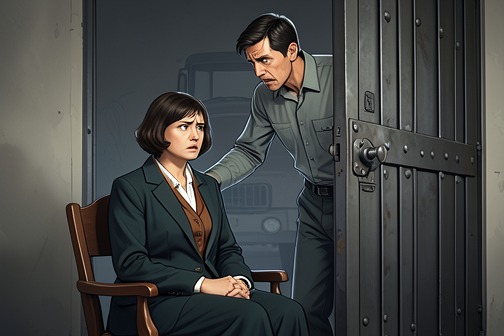
In late March 2014, [Inge Dalby](entity:character-recall-character-inge-dalby-4c2ce5c406b8)’s interview with [Carl Mørck](entity:character-recall-character-carl-m-rck-87d0acc1494d) turns a guarded recollection into a detailed account of her affair with [Frank Brennan](entity:character-recall-character-frank-brennan-b0f94bebc8d9), the man [Department Q](entity:organization-recall-organization-department-q-6fa26a84f675) is trying to identify in connection with [Alberte Goldschmid](entity:character-recall-character-alberte-goldschmid-6bdc83927ee1)’s death. Inge describes where she encountered Frank, what drew her to him, the distinctive Volkswagen Kombi he drove, and a cluster of physical details that could help locate him. Yet the interview does not end with her account simply accepted: a challenge from [Rose](entity:character-recall-character-rose-154df6dd1d30) makes the question of what Inge knew, and when she knew it, newly urgent.
## Resistance and the return to the case
At first, Inge makes clear that she does not want to revisit the period. She says that she has discussed it with [Kristoffer Dalby](entity:character-recall-character-kristoffer-dalby-16dd155aeec7) for what feels like an eternity and considers it passé. Carl counters that the police have grounds to believe she withheld evidence when they spoke before. He says he has four or five questions for her and warns that, if she does not answer, she may be taken to the station for questioning. Inge shows no reaction to that warning.
Her reluctance is not the same as a claim that she has nothing to say. After a long silence, she acknowledges that there were many things she could have told [Christian Habersaat](entity:character-recall-character-christian-habersaat-943273d2076f) at the time but did not. She then asks whether the detectives knew Habersaat. On learning that they did not, she describes him as strange and says she disliked him from the start. In her account, Habersaat repeatedly pressed the people around [Alberte](entity:character-recall-character-alberte-ce5fb59d6bf2) to point to someone among themselves who might have caused her death; when that did not work the first time, he returned, again and again. Inge’s recollection therefore adds not only information about Frank, but also her view of the earlier investigation and of the pressure Habersaat brought to bear on those he questioned.
## The affair and the Volkswagen Kombi
Inge says she met Frank at the beginning of July, the day before a classic-car event. She had been with him in his vehicle, and admits that they had sex there for a time. She says she chose a secluded place at the back of the grass area, but had not expected to be moved on or for the classic cars to arrive so early. Frank dealt with the problem of being parked where he was not allowed; Inge made her escape because she did not want her uncle to catch her with the hippie.
The affair was secret from Kristoffer, whom Inge was also seeing. When Carl asks about the overlap, she says Frank could do things Kristoffer could not and had never learned to do. She later insists that she had been deeply in love with Frank, while also saying that, from Frank’s perspective, their relationship was largely sex. The contrast matters to her account: she presents herself as emotionally attached, not merely as someone who happened to remember a man from the island.
Inge gives the detectives a concrete identifying feature of Frank’s vehicle. She explains that the black, arched line rising from the roof belonged to a large peace sign, whose circle continued partway down the sides. This confirms that her earlier description of the Volkswagen Kombi was based on direct experience rather than a guess. When asked for other details that might help find the man, she begins to set out a fuller portrait, turning a vehicle clue into a broader identification lead.
## A remembered face and a sun-focused stranger
Inge says that she first saw Frank at the hippie house at [Ølene](entity:location-recall-location-lene-52b2176d6bc4), where she had gone with a friend out of curiosity. She remembers him walking around shirtless and looking attractive; she and her friend were interested partly because, as she puts it, there was little happening on the island. She says she later met him in [Rønne](entity:location-recall-location-r-nne-887fc2fc5854), and that they began seeing one another after that. She kept the relationship from Kristoffer because she expected it to end suddenly and valued having someone from the island to fall back on.
Her physical description is precise. Frank was about six feet one inch tall and six or seven years older than she was. He had strong, fine features, a husky but warm voice, a tan that gave way to light skin beneath his clothes, and long, almost ash-blond hair reaching his collar. A small dimple in his chin showed in certain light. His eyes were blue, his eyebrows very dark, and his front teeth rather wide; one had a small white mark that he called a sunburn. Inge says he had no visible scar or other mark and spoke about wanting tattoos, though he had not decided what he would get.
She also remembers his clothes: a bead necklace, loose woven shirts, jeans, and very large homemade-looking boots with unusually wide soles. They were not well made, she says, but looked cool; at times his appearance reminded her of a Cossack. These details accumulate through the interview rather than arriving as a single prepared description. The detectives listen as Inge recalls the small particulars of their time together, even when she recognizes that some everyday memories may not immediately help them find him.
Frank’s interest in the sun, however, connects those particulars to a possible reason for his presence on [Bornholm](entity:location-recall-location-bornholm-ba560d38c175). Inge says he told her he was on the island because he was preoccupied with the sun. He also claimed to have found two different sunstones within a week: first one like those used by Vikings for navigation, then another like those found in the sun-cult area at [Rispebjerg](entity:location-recall-location-rispebjerg-f62e227b5f2d) near Dueodde. The recollection gives his enthusiasm a specific setting and objects, linking the man Inge knew to the landscape and religious interests the investigation is examining.
## A lead, and a challenge to her account
Carl tells Inge that she is not a direct suspect, but that she could become important if questions arise that the police cannot answer. They may ask her to identify Frank if they find him. He gives her his card, asks her to let them know if she plans to go anywhere, and requests that her husband find a photograph from their trip to [Østerlars Church](entity:location-recall-location-sterlars-church-873cdb0511d2). Carl also refers to the possibility that she may need to return to the island to be with her children. At that, Inge’s expression changes: she frowns in a way Carl reads as a sign that she may be about to cry, and he asks whether she no longer sees her children. The exchange raises a personal concern without establishing the circumstances behind it.
The investigative value of Inge’s account is therefore paired with a remaining doubt. Rose argues that it is extremely difficult to believe Inge would not have known what her boyfriend called himself; even if she had heard the name only through Alberte, Rose says, it seems unlikely she would have forgotten it. Carl turns to Inge and asks what she has to say. She appears rooted to the spot, as if caught red-handed, but the scene supplies no answer that settles the accusation. The interview has sharpened the image of Frank and exposed the affair, while leaving open whether Inge’s earlier silence was merely reluctance to revisit the past or something more consequential.
Event 16
Wanda Phinn's Murder and Disappearance
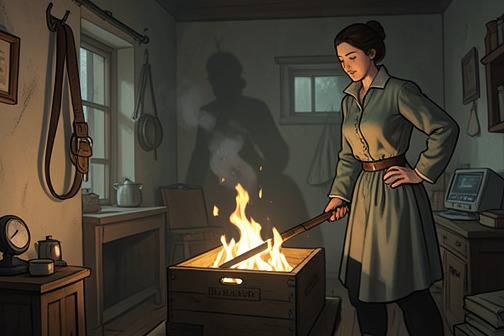
[Wanda Phinn](entity:character-recall-character-wanda-phinn-b2f5c4ae9ed5)’s murder and disappearance are reconstructed not through a recovered body or a complete account of the crime, but through the uncertain afterlife of her belongings and the memories of women who knew her. [Pirjo](entity:character-recall-character-pirjo-a806ff3176e3) is associated with Wanda’s killing and concealment; later, a belt and fragments of conversation expose how Wanda’s presence had been denied, then inadvertently acknowledged.
## The disappearance and its aftermath
Wanda’s body is never found. That absence leaves the murder difficult to establish through a conventional physical record and makes the surviving details of her life unusually important. The evidence presented here does not describe the circumstances of the killing or establish a precise sequence for it. Instead, it shows the later handling of her possessions and the way the mystery of her whereabouts continues to surface in conversation.
A week after the murder, a woman recalls emptying a box of Wanda’s belongings and burning what was in it. The recollection turns on a doubt: perhaps she had overlooked the belt. That uncertainty matters because the belt is not merely another item among discarded possessions. It becomes a surviving object capable of connecting Wanda to people and places from which, according to some accounts, she was absent.
## The belt and Wanda’s disputed presence
[Shirley](entity:character-recall-character-shirley-569eba7b10e5) identifies the belt as a birthday present she bought for her best friend shortly before Wanda left [London](entity:location-recall-location-london-420923d4a60a). Her recognition directly challenges the claim, made by others at the [Nature Absorption Academy](entity:location-recall-location-nature-absorption-ac-6e3eeffd9c78), that Wanda had never been there. The belt carries a specific personal history: Shirley remembers buying it for Wanda, rather than for herself, and links it to the period before Wanda’s departure from London.
Another account adds a more complicated path for the object. Wanda had retrieved old clothes from a removal box in the loft, where they had been left three years earlier. She noticed that her own belt was missing and that a different belt was in the box, so she took that one instead. Shirley says she helped Wanda pack and noticed the belt’s colors, buckle, and scratch when Wanda bent over her case. The recollection gives the object identifying marks, but it also complicates a simple chain of ownership: the belt’s meaning depends on remembered exchanges and on who recognizes it.
This detail does not, by itself, explain how Wanda died or where her body was taken. Its force is evidentiary and relational. A gift that might otherwise have been an ordinary possession becomes a point of contact between Shirley’s memory and the disputed story of whether Wanda was ever present at the Academy.
## Stories, slips, and the return of the mystery
The mystery persists after Wanda’s belongings have been destroyed. One woman is described as unable to resist letting something slip about Wanda from time to time when an opening presents itself. The account suggests that the subject is not settled: it returns in fragments, rather than as a complete disclosure. Those remarks do not supply a full chronology, but they keep Wanda’s absence active in the investigation and among those around her.
A later recollection connects a dream with a story about a friend and a belt, as well as with the time when Jeanette had to leave the group. The speaker says that a particular detail in the story stood out because of the dream she had experienced. The passage presents memory as a form of piecemeal recognition: an earlier account acquires a new significance when set beside a dream and another departure. It does not establish that the dream proves what happened to Wanda, but it shows how the mystery is approached through repeated, overlapping recollections.
## Significance and limits of the evidence
The belt’s changing significance gives the event a material center without resolving it. It is first connected to a gift from Shirley, then to Wanda’s clothes and packing, and finally to a box of belongings that was emptied and burned after the murder. Each remembered detail narrows the gap between Wanda and the people who speak about her, while leaving the central facts of the killing and concealment incompletely visible.
The narrative therefore distinguishes recognition from proof. Shirley’s memory supports the belt’s connection to Wanda; the other recollections explain how a belt could have entered a box of clothes; and the later remarks show that the disappearance continued to trouble those around her. None supplies a body or a complete account of the crime. Wanda’s murder remains legible through the traces left behind and the contradictions those traces expose: she is said never to have been there, yet her belongings and the memories attached to them insist on her presence.
Event 17
Shirley Identifies Wanda's Belt
[Shirley](entity:character-recall-character-shirley-569eba7b10e5)’s identification of [Wanda Phinn’s belt](entity:object-recall-object-wanda-phinn-s-belt-ac439dc10595) turns a misplaced possession into evidence that threatens to expose [Pirjo](entity:character-recall-character-pirjo-a806ff3176e3). The belt’s distinctive details connect it to Wanda, while Pirjo’s involuntary recollection of burning one makes Shirley’s discovery more than an unsettling coincidence: it brings the possibility of exposure, and of violence, into the room.
## The belt appears
Shirley comes to Pirjo’s desk despite the Do Not Disturb sign. For months, Pirjo has managed their contact with subdued smiles and deliberate distance, hoping that fewer conversations will mean fewer questions. On this visit, Shirley does not return the smile. She waits while Pirjo finishes a call, apologizes to the caller, and promises to present their discussion to the person in charge at the Holistic Chain when she calls on Wednesday. The ordinary business exchange delays the confrontation but cannot soften it.
Shirley says there is something she does not understand and hands Pirjo a dark object. It is a belt with diagonal red and grey stripes. Pirjo takes it as if it might strike and asks what Shirley means by showing it to her. Her studied calm is already under pressure: as she handles the belt, her attention turns to maintaining her composure and working out what could have happened.
## How Shirley identifies Wanda’s belt
Shirley explains that she bought the belt as a birthday present for her best friend shortly before that friend left [London](entity:location-recall-location-london-420923d4a60a). The friend was [Wanda Phinn](entity:character-recall-character-wanda-phinn-b2f5c4ae9ed5), whom Shirley had asked about when she arrived at the center; she recalls that people there had insisted Wanda had never been. The belt was expensive, beyond what Shirley would normally buy for herself, but she wanted to give it to Wanda. A long, superficial scratch had allowed Shirley to buy it at a discount.
The object has reached Shirley through Jeanette. After leaving the center, Jeanette collected clothes she had stored in a removal box in the loft three years earlier. Her own belt was missing; in its place she found the striped one and took it. Shirley had helped Jeanette pack and noticed the colors, buckle, and scratch when Jeanette bent over her case. Pirjo says Jeanette is away because her sister is ill and suggests she may not return. Shirley already knows Jeanette has left; she does not accept that this explains the belt.
Shirley’s case rests on a cluster of physical details rather than resemblance alone. Jeanette remembers her missing belt as black, whereas this one is two-tone; the brand matches the one Shirley bought; and the scratch is distinctive. Most tellingly, the second-to-last hole is stretched from use. Jeanette had to move the belt out by at least two holes when trying it on, while Wanda was very thin around the waist. Shirley is sure the belt belonged to Wanda. Its wear and fit preserve traces of two bodies: Jeanette’s attempt to wear it and the earlier use that, to Shirley, identifies Wanda.
## Pirjo’s recognition and the threat
Pirjo denies recognizing the belt, turning it over and calling it pretty. She tries to make the object ordinary and interchangeable, as if similar-looking belts could dissolve Shirley’s certainty. But the denial is undercut by a thought she cannot dismiss: she had burned a belt and thrown it into the sea with the ashes. She wonders whether there had been a buckle in them. The belt in Shirley’s hand therefore connects the present discovery to Pirjo’s attempt to destroy one, though the immediate scene does not establish how the object came to be at the center.
Shirley’s certainty changes the stakes. Her face darkens; frustration, irritation, and fear show together. Pirjo feels her nerves in her diaphragm and thinks not about how the belt arrived at the center, as Shirley must be thinking, but about how to solve the problem. If it cannot be resolved, she considers the safest way to get rid of the person she regards as a threat to her life. The belt has shifted from a disputed possession to a danger that Pirjo believes must be managed.
## An unresolved confrontation
Shirley asks whether Pirjo can understand what the discovery means, sounding suddenly lost. Pirjo takes the opportunity and grabs Shirley’s hand. The scene ends at that physical interruption, before its consequences are shown. The belt has made Wanda’s absence materially present: its scratch, buckle, brand, and stretched hole carry a history Shirley can recognize, while Pirjo’s reaction reveals how urgently she wants that history contained.
Event 18
Valentina Reveals Her Suspicions to Pirjo
[Valentina Reveals Her Suspicions to Pirjo](entity:event-recall-event-c76e38d4e288) is the moment a dream becomes an accusation. In [Pirjo](entity:character-recall-character-pirjo-a806ff3176e3)’s counseling office, [Valentina](entity:character-recall-character-valentina-13ad2fe56dc8) links the black-winged angel in her dream to Pirjo, the dream’s hall to the [Stable of Senses](entity:location-recall-location-stable-of-senses-7a59d69eefdc), and its yellow shapes to [Pirjo’s scooter](entity:object-recall-object-pirjo-s-scooter-5d4dde33a469). She then connects what she saw to the day [Malena](entity:character-recall-character-malena-d9d69fd03c36) miscarried and to [Wanda Phinn](entity:character-recall-character-wanda-phinn-b2f5c4ae9ed5)’s arrival from [London](entity:location-recall-location-london-420923d4a60a). Pirjo maintains a soothing manner, but the conversation forces her to confront the possibility that Valentina and [Shirley](entity:character-recall-character-shirley-569eba7b10e5) can connect events the academy needs kept apart.
## The Counseling Visit
Pirjo receives Valentina in an office that serves as a confessional, counseling room, and advice center for the disciples. The stated ideal is that nobody with a problem is turned away. Pirjo waves Valentina in despite her hesitation at the door, and asks what is troubling her before Valentina has even sat down. Her manner is direct, but her attention is divided: she wants the conversation over quickly so she can think in peace.
Valentina is not a casual visitor seeking reassurance. When she first came to the center, she carried the effects of severe bullying by colleagues and physical abuse by a partner. She had come to see herself as a used-up commodity, unworthy of acceptance; the desire to be accepted had become her driving force. That history gives the office encounter a double edge. Pirjo occupies the role of a protective, maternal counselor, while Valentina is one of the people who once depended on her for care. Now Valentina’s account threatens the safety that role is supposed to provide.
## From Dream to Warning
Valentina describes a dream in which an angel with black wings descends through the roof of her room and covers her eyes with a burning hand. The angel rises into a vast, projector-lit hall that seems to vibrate with its presence. The hall’s walls then disappear, revealing yellow blobs inside, before Valentina wakes. Pirjo acknowledges that the dream feels unusual but says that dream analysis is not her strength and suggests it may not be a cause for worry.
Valentina clarifies that the dream itself is not what troubles her. She has already discussed it with several people at the center: some treated it as an illustrative dream revealing personal nonsense, while others understood it as advice about her actions and unresolved conflicts. Her talk with Shirley changed the interpretation. Valentina came to regard the dream as a warning, and she tells Pirjo that Shirley helped her remember details she had seen but had not initially understood as connected.
The connection begins with Shirley’s account of her friend Wanda and the belt that Jeanette found in the loft of the Stable of Senses. Valentina recalls that the Stable is darker than the other buildings at the center. Its reddish light matches the hall in her dream. The imagery, previously uncertain and private, now points toward a specific place and a specific day.
## The Day at the Stable of Senses
Valentina identifies Pirjo as the angel. She says she saw Pirjo from the beach, arriving at the Stable of Senses on her yellow scooter; in her interpretation, the scooter accounts for the yellow shapes revealed when the hall’s walls disappeared. She places this sighting on the day Malena miscarried. Several people had been looking for Pirjo during meditation hour because [Atu Abanshamash Dumuzi](entity:character-recall-character-atu-abanshamash-dum-7af307b1847a) wanted her to take Malena to the hospital. Valentina remembers being relieved when Pirjo returned, believing that Malena would receive help and that Atu would be reassured.
That memory had made Pirjo’s return appear almost salvational to Valentina. Later, in the assembly hall, Pirjo looked beautiful to her, like an angel of deliverance. Valentina had believed Pirjo would help Malena during her hospitalization. The dream revises that image: the angel’s black wings make the figure a warning rather than a guarantee of rescue. Valentina adds a second chronological link. Shirley had told her the precise day Wanda left London, and Valentina worked out that Wanda must have arrived on the same day as Malena’s miscarriage, Pirjo’s scooter, and the visit to the Stable. She says she will never forget that date.
Pirjo answers that she remembers the day too. She says she had felt unwell, ridden to Nordodden to meditate, and parked the scooter inside the Stable on an impulse to charge its battery. She also insists that Malena was given every chance to return quickly to the center or remain in hospital until she recovered. When Valentina connects Wanda’s departure and arrival to that same date, Pirjo calls it a strange coincidence and suggests Wanda may have invented a story for Shirley. Her explanations do not erase the pattern Valentina has assembled; they place Pirjo herself at its center.
## The Suspicion and Its Consequences
Valentina finally states the meaning she has drawn: Pirjo was the angel, the hall was the Stable of Senses, and the black wings warned that something unspeakable had happened. She tells Pirjo because Pirjo has often lifted her spirits when she needed help. The confidence is therefore also a disclosure of trust, even as its content becomes dangerous. Pirjo thanks her and asks for time to think. She mentions having had a similar dream, though hers contained a large bird with red wings near the body and grey tips rather than an angel. Valentina looks at her skeptically, and the exchange closes without restoring their earlier certainty or ease.
After Valentina leaves, Pirjo sits heavily at the table with clenched fists. She considers what would happen if the [Danish police](entity:organization-recall-organization-61db60ff8ef5) found them, which she believes is inevitable. The academy, she thinks, must offer no reason to doubt its public account of purity, ethical conduct, and concern for the people it serves. She includes herself, Atu Abanshamash Dumuzi, and their closest helpers in that account, insisting inwardly that none of them could have been responsible for anyone coming to harm. Her need to preserve that appearance turns Valentina’s warning from a troubling conversation into a practical threat.
Pirjo concludes that neither Valentina nor Shirley can be there when the police arrive, whatever the cost. She places her hands on her pregnant womb and promises her unborn child that she will protect both the child and its father. Valentina seems manageable to her: Pirjo thinks she could be sent abroad on a mission. Shirley presents a greater problem because she is making friends at the center and holds on to her theories and mistrust. The scene thus reverses the office’s promise that nobody with problems is turned away. The counselor’s first private response to a disciple’s warning is not to pursue the truth, but to consider how to remove the people who might reveal it.
Event 19
Accusations in Ronny's Will Read at His Funeral
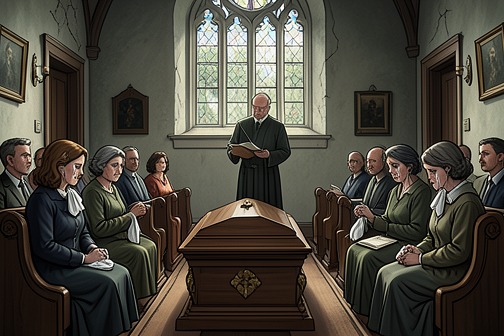
[Accusations in Ronny's Will Read at His Funeral](entity:event-recall-event-5b010d104c40) transforms a family funeral into a public reckoning for [Carl Mørck](entity:character-recall-character-carl-m-rck-87d0acc1494d). [Ronny](entity:character-recall-character-ronny-a8c8edc6f130)’s posthumous statement claims that he killed his father with Carl’s help, making a dead man’s account the source of an accusation Carl cannot confront privately or dismiss without consequence. Its force lies not only in the alleged crime, but in the ceremony Ronny has arranged around it: a small congregation, hired mourners, a will read aloud, and a bequest that binds the accusation to Carl’s name.
## The Funeral and Its Staged Grief
The service takes place on Saturday, May 10, 2014. Two women in the front row cry at regular intervals, mechanically reaching for the handkerchiefs in their laps. They are not Ronny’s wife, sister, or the girl from a neighboring farm who had once dreamed of being his. No one else in the church seems to be crying—not during the hymns or while the vicar reads the sentimental passages Ronny had requested in his testamentary wishes. [Assad](entity:character-recall-character-assad-d8dad8cf0e48) discovers that the women have been hired because Ronny specified in his will that people should be paid to cry for him.
The arrangement makes grief part of the ceremony’s explicit design. The coffin is maroon and only half covered with flowers; there are no flowers in the aisle, and the congregation numbers a little over twenty, including the two paid mourners and Assad, who is there with Carl Mørck. Carl considers whether anyone else would have mourned Ronny. He thinks of Ronny’s history of lying, cheating, and leaving trouble behind him, and even wonders whether Ronny could have been responsible for his own mother’s death. That last thought is Carl’s suspicion, not an established fact. The hired mourners give visible form to the gap between the grief the funeral conventionally calls for and the grief Ronny’s conduct may have earned.
## The Will Takes the Floor
After Ronny is taken to the crematorium, the gathering continues at [Restaurant Hedelund](entity:location-recall-location-restaurant-hedelund-47a74d7a24d6). The place connects the funeral to an earlier family occasion: it is where Carl Mørck, newly confirmed and nervous, once gave the first and only speech of his life, thanking his parents for a party and a cassette recorder. His mother had smiled and shed a tear. Now, in the same room, trays of open sandwiches and drinks accompany a gathering trying to behave as if time has not passed and the occasion were less painful.
A second cousin on Carl’s mother’s side announces that the family attorney has asked him to read a statement enclosed in Ronny’s will. The setting gives the document a captive audience: relatives and acquaintances are gathered together, and the accusation will be heard not as private correspondence but as part of Ronny’s carefully arranged farewell. The statement begins with Ronny thanking those present from what he describes as his newly acquired Buddhist temple and asking them to raise their glasses. The request receives too little pause for anyone to act on it before the tone changes. Ronny says that he hated his father and then claims to have made his wish come true by killing him.
## The Allegation Against Carl
The statement next names Carl Mørck. Ronny thanks his cousin for making it possible to get rid of the old man and asks the gathering to toast him, invoking Aunt Tove as someone who had ensured Carl would be present. He then supplies a method: Carl, he claims, taught him karate, enabling him to paralyze his father with a single strike in a way that would not be detectable. Ronny says that he let his father fall into a river and left him there. The letter presents this as a shared act and as a debt of friendship, not merely a crime: Ronny calls Carl his best friend and says he looked away.
The will attaches a further consequence to the claim. Ronny says that the circumstances are set out in detail elsewhere in the will, and that he has sent memoirs to major publishers that will supposedly establish Carl’s involvement. He also leaves Carl everything remaining after his wife has taken her share. The allegation and the inheritance thus arrive together: the bequest can be read as a reward for complicity, while the promised memoirs threaten to carry Ronny’s version beyond the family gathering. Neither the accusation nor the existence of a supporting account makes the claim true; the funeral scene presents Ronny’s assertion and Carl’s denial, not independent proof.
## Carl’s Denial and the Violence Afterward
Carl anticipates that the room will turn against him, and the reading leaves him with little opportunity to shape how the relatives receive the charge. He calls the statement false and describes his memory differently: on the day in question, he says, he was walking toward two girls standing beside the road with their bicycles. He insists that he saw nothing because he was not looking in the direction of the alleged killing. The distinction is crucial to his defense: he does not merely deny helping Ronny, but rejects the account that he was present as a witness who chose to look away.
Ronny’s brother rushes at Carl and punches him in the jaw as Carl pushes back his chair. Assad, neatly dressed in a black jacket, has already urged Carl to leave; as Carl falls, one arm supports him from behind while another strikes Ronny’s brother. The sudden assault turns the accusation into an immediate bodily confrontation. The room’s silence, which had followed Ronny’s words, gives way to violence before Carl can answer the larger threat the will poses to his standing.
## The Accusation’s Effect
Carl’s fear extends beyond the relatives’ judgment. He believes his family might cut him off, but considers public exposure more damaging: it could ruin his police career and brand him as an investigator who had once been an accomplice to murder. Ronny’s claim is therefore aimed at more than family memory. By promising that his memoirs will confirm the story, he threatens to make the accusation follow Carl into his professional identity, even though Carl disputes it.
The episode also reverses the ordinary roles of the funeral. Ronny cannot be questioned, yet his will controls the service’s emotional choreography and gives him the last word; the hired mourners supply tears, while the living relatives are left to absorb the charge. Carl and Assad leave rather than remain at the center of the gathering’s anger. The funeral’s theatrical details—a paid performance of grief, a toast that goes unanswered, and a testament read aloud—make the scene less a settled account of the past than a contest over who will be believed after Ronny is gone.
Event 20
Alberte Goldschmid's Fatal Traffic Accident
[Alberte Goldschmid](entity:character-recall-character-alberte-goldschmid-6bdc83927ee1)’s fatal traffic accident is reconstructed through clues that point in different directions: her unexplained early-morning bicycle ride and the physical mechanism that sent her into a tree. Carl’s measurements make a meeting place seem possible, not proven. Later technical findings, meanwhile, undermine the theory that a board recovered from the water caused the collision’s extraordinary outcome. The investigation advances by narrowing possibilities, but neither line of inquiry yet establishes exactly what [Alberte](entity:character-recall-character-alberte-ce5fb59d6bf2) was doing or how the vehicle struck her.
## Background and the Unanswered Journey
Carl studies a notice board crowded with newspaper clippings, photographs, map fragments of [Bornholm](entity:location-recall-location-bornholm-ba560d38c175), and colored pins. Arranged together, the collision scene, the community hall in [Listed](entity:location-recall-location-listed-d7e03d9bf560), the folk high school, and other people and places appear to form a simple case: a young woman was killed, and an investigator wanted to find the person responsible. But the apparent overview produces more questions than answers. The most pressing concerns why Alberte had cycled early in the morning to a side road some distance from the school, a place Carl thinks must have mattered to her.
A meeting with the man she was infatuated with offers an attractive explanation, but Carl recognizes that it is only a possibility. The evidence does not establish that the two had arranged to meet, whether the arrangement was made the day before, or whether they used the same time and place repeatedly. She might instead have gone to check for a message. The police found no note; Carl considers both that none had been left and that one might have been removed afterward. These alternatives keep the apparent romance from becoming a settled account of the journey.
## Mapping a Possible Meeting Place
Carl recalls that Alberte cycled frequently, loved the surrounding countryside, and was usually away for only half an hour, according to the caretaker at the folk high school. He uses those details to test the distance she could have covered. Estimating that she might have ridden at least twenty kilometers an hour, he reasons that a destination no more than five kilometers away would allow time to travel there and back and remain for a few minutes.
He takes a compass, measures five kilometers using the map’s scale, places one leg at the school, and draws a circle around it. The tree where Alberte was found lies inside the radius. That result makes the tree a plausible meeting place or a location where two people could leave messages for one another. Its potential as a romantic rendezvous also sharpens the contrast with what followed: whatever significance it had for Alberte, the location became the setting associated with her death. Yet the circle proves only that the trip fits the proposed time and distance. Carl explicitly resists treating the map as proof, and the possibility that Alberte went there for a note leaves open the chance that she went in vain.
## Physical Evidence and the Limits of Reconstruction
A technical review addresses a different uncertainty: what object, if any, helped propel Alberte into the tree. The technicians confirm that the recovered splinter was plywood, but conclude that the board found in the water was not the board that sent her there. The boreholes described by [Christian Habersaat](entity:character-recall-character-christian-habersaat-943273d2076f) could not, on their own, have served to attach that board to a vehicle such as the Kombi. Hooks through the holes might offer one explanation, but the investigators cannot identify where such hooks would have been fastened.
The proposed attachment point beneath the windshield wipers creates a further problem. If hooks had connected the board to the furrow with its rubber gasket, technicians reason that both the windshield and the board would have been thrown around. They would expect to find traces of them even if someone had thoroughly cleaned the scene; the examination, however, gave no indication that such a cleanup had occurred. The absence of those expected traces weakens the proposed mechanism rather than supplying a replacement for it.
The fender alone, the technicians also report, would not have been sufficient to throw Alberte into the tree. Their assessment is that the force would have required a properly adjusted shovel blade. This finding distinguishes the physical capacity needed to produce her trajectory from the board actually recovered: the board does not fit the evidence, while a shovel blade is identified as necessary to the result. It does not, by itself, identify the object used in the collision or explain how it was mounted.
## An Accident Still Unresolved
The investigation therefore holds two provisional reconstructions at once. Carl’s circle shows that Alberte could have reached the tree and returned within her usual half-hour absence, making a rendezvous or message point feasible. The technical examination, by contrast, rejects the recovered board as the implement that launched her into the tree and indicates that the fender alone could not account for what happened. Neither conclusion supplies the missing certainty: the map cannot tell Carl why Alberte went there, and the physical findings do not settle how the fatal collision was engineered. The accident remains a problem of inference, with a plausible destination and a disputed mechanism but no complete account.
Event 21
2007 Amager Island Shooting of Three Police Officers
The January 26, 2007 attack on three police colleagues killed [Anker Høyer](entity:character-recall-character-anker-h-yer-7057b8a701b7), permanently physically damaged [Hardy Henningsen](entity:character-recall-character-hardy-henningsen-3f1f3b339f78), and wounded [Carl Mørck](entity:character-recall-character-carl-m-rck-87d0acc1494d). The recovered pistol later linked all three crimes, turning a buried episode of personal trauma into evidence presented before reporters—and making the weapon itself a confrontation Carl could not avoid.
## The Attack and Its Victims
The three crimes took place on January 26, 2007. At a press conference more than seven years later, [Terje Ploug](entity:character-recall-character-terje-ploug-7dc6a9fa4643) listed the murder of Anker Høyer, the permanent physical damage suffered by Hardy Henningsen, and the shooting of Carl Mørck as acts committed with the same weapon. Hardy could not attend the conference; he remained profoundly marked by what had happened. The account establishes distinct consequences for each of the three colleagues: Anker was murdered, Hardy suffered lasting physical harm, and Carl was shot.
## The Weapon and the Investigation
The weapon brought before the reporters was a PAMAS G1, a semi-automatic pistol described as a variant of the better-known Beretta 92, produced for the French Gendarmerie Nationale. Its serial number had been filed away. Although many such pistols had disappeared from military arsenals over the years, investigators had no way to establish the history of this particular one.
Ballistic investigations did, however, establish its role in the 2007 crimes: the pistol was the weapon used in the shooting of the three police colleagues. The firearm’s uncertain provenance therefore contrasted with the certainty of the forensic match. Investigators could not trace where it had come from, but they could connect it to the attack on Anker, Hardy, and Carl.
## The Press Conference and Carl’s Return to the Event
When Ploug raised the heavy pistol for the assembled reporters, Carl recognized the muzzle from which five 9mm projectiles had been fired. The rounds had changed several lives, including his own. As the weapon pointed toward him, his body reacted: he felt pressure rising in his head, and his arms and hands seemed on the verge of shaking. His forehead felt icy while his body felt almost feverishly hot.
Carl pushed the muzzle away with his left index finger. Cameras clicked in response, transforming an involuntary encounter with the weapon into a public image. Ploug then set the pistol on the table and presented its type and forensic significance. The sequence made the press conference more than a formal announcement: the gun was both evidence of the crimes and a physical trigger for Carl’s recollection of their consequences.
## Later Connections and Significance
The shooting was discussed at a press conference that also addressed other violent cases. Police had previously been unable to establish a connection between the [Schiedam](entity:location-recall-location-schiedam-c9effcfb23ab) case in the [Netherlands](entity:location-recall-location-netherlands-7cbacd5ddd58) and crimes in [Denmark](entity:location-recall-location-denmark-c503f1b59838), and had handed the Dutch case to their colleagues as a local investigation. At the conference, [Lars Bjørn](entity:character-recall-character-lars-bj-rn-6c41fd779309) said that the nail-gun murders in Schiedam, [Amager](entity:location-recall-location-amager-9eefd057d361), and [Sorø](entity:location-recall-location-sor-292862078abc) were now thought likely to be connected. That announcement concerned the nail-gun cases; the pistol’s ballistic identification separately established its connection to the 2007 attack on the three police colleagues.
The event thus returns through two forms of evidence: the pistol’s forensic link to the shooting and Carl’s bodily response when he sees it again. Its serial number cannot recover the weapon’s history, but its match to the three crimes fixes the weapon to the past that the press conference has made present once more.
Event 22
Solrød Nail-Gun Serial Murders
The [Solrød Nail-Gun Serial Murders](entity:event-recall-event-nail-gun-21fb931e2984) involved the killing of two men with a nail gun in a car repair shop. The case gains a wider connection when investigators find that the younger victim was named among [Rasmus Bruhn](entity:character-recall-character-rasmus-bruhn-046d25983277)’s Danish relations—and was the nephew of another nail-gun murder victim, linking the killings across separate investigations.
## The killings and their victims
Two men were murdered with a nail gun in a car repair shop in [Sorø](entity:location-recall-location-sor-292862078abc). The evidence identifies one victim as the younger of the two, but does not establish the circumstances of either man’s death beyond the weapon and location. Their murders form one part of a wider pattern of nail-gun killings under investigation.
## A family link emerges
The connection surfaced during the technical presentation about Rasmus Bruhn’s body and the search of his home. His notebooks contained names, including relatives in [Denmark](entity:location-recall-location-denmark-c503f1b59838); among them was the younger victim from the Sorø repair-shop murders. That victim was also the nephew of the man whom [Carl Mørck](entity:character-recall-character-carl-m-rck-87d0acc1494d), [Anker Høyer](entity:character-recall-character-anker-h-yer-7057b8a701b7), and [Hardy Henningsen](entity:character-recall-character-hardy-henningsen-3f1f3b339f78) had found murdered on [Amager](entity:location-recall-location-amager-9eefd057d361), with a Paslode nail in his temple.
## Investigative significance
The relationship between the younger victim and the man killed on Amager turned two apparently separate cases into part of a connected inquiry. The discovery offered investigators a new route for understanding the killings, though the evidence presented here does not identify who committed the repair-shop murders or explain their motive.
Event 23
Rasmus Bruhn Murder Case
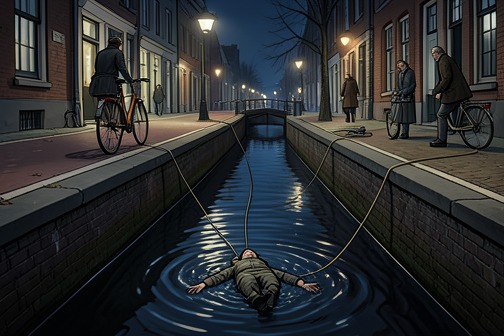
[Rasmus Bruhn Murder Case](entity:event-recall-event-ddbfb3a2a496) concerns the killing of [Rasmus Bruhn](entity:character-recall-character-rasmus-bruhn-046d25983277), a forty-four-year-old Danish citizen living in the [Netherlands](entity:location-recall-location-netherlands-7cbacd5ddd58). His body is discovered in the [Meeldijk Canal](entity:location-recall-location-meeldijk-canal-58e38256832b) after he was apparently restrained on a cycle path and dragged through a drainage pipe into the water. The recovery site and the evidence found there allow investigators to outline a method, while details about Bruhn’s identity and possessions open lines of inquiry without, in this account, naming the person responsible.
## Discovery and Setting
Three days before the case is described, twelve-year-old Daniel Jippes finds the body while cycling in Vriesland, a suburb southwest of [Rotterdam](entity:location-recall-location-rotterdam-4f8857c2d4f0). He is heading toward a park area where the Meeldijk Canal passes beneath the bicycle path through a drainpipe. The location matters to the reconstruction: the canal is not simply where the body is found, but is connected to the path by a confined passage beneath it.
The arrangement of a sturdy length of string gives investigators a possible account of how Bruhn reached the water. One end is tied to his right foot, the string crosses the cycle path, descends on the far side, and passes beneath the path through the pipe before reaching his left wrist. Bruhn is therefore found with the string linking opposite sides of the path through the drain. That placement makes the pipe and path parts of the same apparent mechanism rather than incidental features of the discovery site.
## Reconstruction of the Killing
The technicians’ reconstruction is an inference from the body and the physical arrangement, not a direct account from a witness. They assume Bruhn was tied while lying on the cycle path; the string was then pulled through the pipe, drawing him into the water and through the narrow passage, where he drowned. The described defensive bruising supports the conclusion that he resisted. Scratches inside the pipe and disturbed silt on its bottom provide further evidence that he tried to pull himself out.
These details establish a sequence of restraint, movement, and drowning, but they do not establish who carried it out or why. The investigators’ explanation connects the string, the path, the pipe, and the signs left inside it into a coherent model of the assault. Its force lies in that convergence: the placement of the string supplies a route, while the marks in the pipe and silt suggest struggle along that route. The account does not present a named witness to the killing or identify an assailant.
## Bruhn’s Identity and the Search for Connections
Bruhn is identified as a Danish citizen who lived in the Netherlands, had several prior convictions, and had worked as a journalist in recent years under the pseudonym Pete Boswell. These facts give the inquiry more than one way to approach his life: his public-facing work and his criminal record coexist in the same brief profile, without the account explaining how either relates to his death.
The body had been in the water for several days by the time it was found. Despite that interval, a business card on Bruhn led investigators directly to his residence on Haverdreef, in De Akkers, just north of the crime scene. The account notes that he had no other belongings on him. The card therefore serves as the practical link from an unidentified body at the canal to a known address, while the short distance between residence and discovery site supplies geographical context without proving how he travelled there.
At the residence, investigators found a pistol with a full magazine and Bruhn’s fingerprints on it, 250 grams of low-grade cocaine, and notebooks containing names. Some of the people listed had connections in [Denmark](entity:location-recall-location-denmark-c503f1b59838), including people living in [Sorø](entity:location-recall-location-sor-292862078abc). These discoveries broaden the inquiry from the immediate mechanics of the death to Bruhn’s contacts and circumstances. They are reported as items found at his home; the available account does not establish that any one of them was used in the killing or identifies the people in the notebooks as suspects.
## Evidence and Limits
The case is presented through a combination of scene reconstruction and biographical leads. The body’s position, the string’s path beneath the cycle route, the marks inside the pipe, and the silt are used to explain how the drowning may have occurred. Bruhn’s business card, home address, pistol, drugs, and notebooks instead help establish who he was and where investigators might look for connections. Keeping those functions distinct matters: evidence that reconstructs a killing is not automatically evidence that identifies its perpetrator.
Bruhn’s prior convictions and work as Pete Boswell complicate the portrait without resolving it. Likewise, the names in his notebooks point toward a Danish network, but the account supplies no conclusion about the network’s role. The event thus leaves a clear contrast between a fairly specific proposed method and an unresolved question of responsibility. Its investigative significance lies in how a concealed death in a canal becomes legible through physical traces and a single identifying card, even as the motive and killer remain unstated in the evidence presented here.
Event 24
Nail-Gun Case Press Conference
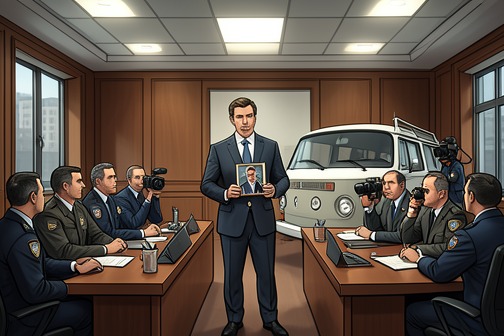
The press conference brought together senior [Danish police](entity:organization-recall-organization-61db60ff8ef5) officials, Dutch investigator Hans Rinus, reporters, and [Carl Mørck](entity:character-recall-character-carl-m-rck-87d0acc1494d). It was called to announce that murders previously treated as separate cases might share a weapon and a wider investigative history. Yet the meeting also became a public contest over attention: while the leadership focused on the nail-gun killings, Carl used the cameras to ask for help identifying a man connected to a long-dismissed death on [Bornholm](entity:location-recall-location-bornholm-ba560d38c175).
## The Cases and the Weapon
[Lars Bjørn](entity:character-recall-character-lars-bj-rn-6c41fd779309) introduced Carl, his head of communications, and deputy assistant commissioner [Terje Ploug](entity:character-recall-character-terje-ploug-7dc6a9fa4643), who had led the investigation since Carl and his team were shot. He also introduced Hans Rinus, who had handled a similar case in a suburb of [Rotterdam](entity:location-recall-location-rotterdam-4f8857c2d4f0). Carl briefly recounted the Dutch murders: two men had been shot with a nail gun firing 90-millimeter Paslode nails, with cocaine stuffed into their mouths. Danish investigators had found no link at first, so the [Schiedam](entity:location-recall-location-schiedam-c9effcfb23ab) case had been handed to Dutch colleagues as a local matter. Terje Ploug now called that separation a mistake.
Ploug identified the shared weapon as a PAMAS G1, a semi-automatic pistol related to the better-known Beretta 92 and produced for the French Gendarmerie Nationale. Its serial number had been filed off, and the disappearance of similar pistols from military arsenals meant its history could not be established. Ballistic examination, however, confirmed that it was the weapon used in the 2007 shooting of three police officers: [Anker Høyer](entity:character-recall-character-anker-h-yer-7057b8a701b7) was murdered, [Hardy Henningsen](entity:character-recall-character-hardy-henningsen-3f1f3b339f78) suffered permanent physical damage, and Carl was shot. Ploug placed the pistol on the table and stated that the ballistic findings linked it to those attacks; a photograph and a data sheet were then projected for the assembled press.
## The Official Message and Carl’s Appeal
Lars Bjørn framed the conference as a public commitment: killings of police officers on duty would remain a high priority, and the police would continue investigating until those responsible were brought to trial. The announcement also reversed the earlier separation of cases. Investigators now believed that the nail-gun murders in Schiedam, the [Netherlands](entity:location-recall-location-netherlands-7cbacd5ddd58), and the killings on [Amager](entity:location-recall-location-amager-9eefd057d361) and in [Sorø](entity:location-recall-location-sor-292862078abc) might be connected. Hans Rinus was invited to explain the Dutch investigation, while the Danish officials presented the newly established link as progress in a broader inquiry.
Carl Mørck used the public platform for a different purpose. Holding up a photocopy of the man beside the VW Kombi, he described a suspect in a road-death investigation: about six foot one, with blue eyes, a dimple in his chin, a husky voice, strong features, dark eyebrows, and wide front teeth bearing a small light mark. The man spoke fluent Danish, was known as [Frank Brennan](entity:character-recall-character-frank-brennan-b0f94bebc8d9), and had since adopted a more unusual name. Carl identified the vehicle as a light-blue VW Kombi with a broad fender; its large peace sign, painted on the roof, was not visible in the photograph.
The appeal tied Frank Brennan to Bornholm in [1997](entity:time-recall-time-1997-83fe85347f22), where he had taken part in excavations of timber circles—platforms supported by thick posts and used for sun worship and offerings of stone and animal bone. Carl said the investigators knew that Frank Brennan worshipped the sun and thought he might still do so. Lars Bjørn tried to halt the disclosure, insisting that the case should be withheld until the police had more to go on. Carl continued, directing anyone with information to contact [Department Q](entity:organization-recall-organization-department-q-6fa26a84f675) and pointing to the number beneath the photograph. By putting the image directly before the television camera, he turned a conference intended to update the public on linked nail-gun killings into an appeal for information about the man he believed could resolve the [Alberte](entity:character-recall-character-alberte-ce5fb59d6bf2) case.
## The Unsettled Basis of the Appeal
The conference took place against an investigation whose earlier assumptions had never been securely tested. The papers Superintendent Birkedal had handed over were not updated after 2002, and the possibility that [Alberte Goldschmid](entity:character-recall-character-alberte-goldschmid-6bdc83927ee1) had been deliberately killed had not been considered. The book leaves open why: perhaps officials feared that a murder case could not be shelved, perhaps the impact site had not been analyzed adequately, or perhaps [Christian Habersaat](entity:character-recall-character-christian-habersaat-943273d2076f)’s forceful insistence on his own theories had discouraged other investigators from challenging him. Because the case had not gone to the mobile task force, no one had introduced sufficient doubt into the local team’s initial view of the death.
That uncertainty shaped the technical work Carl was pursuing alongside the public appeal. He asked that Christian Habersaat’s drawings be scanned and checked against archived analysis of the wooden board, including whether it could have survived a collision, been fastened to the pictured vehicle without leaving marks, and contributed to Alberte Goldschmid being thrown toward and breaking its windshield. He also wanted technicians to improve the photograph of the man with the VW Kombi, while the team continued trying to locate its photographer or the negative. These were questions for testing a theory, not proof that the board or the pictured man had caused the death. The conference’s appeal thus exposed both the urgency of finding the man and the uncertainty still separating a compelling reconstruction from an established account.
## Later Evidence and Reassessment
The public appeal for Frank Brennan belonged to an investigation that would eventually have to dismantle its own most persuasive leads. A later photograph showed [Bjarke Habersaat](entity:character-recall-character-bjarke-habersaat-5e3e4758129e), grinning in his Boy Scout uniform beside a four-wheel drive fitted with a plow. Carl recognized that the team’s laborious search for a wooden board had grown from a small splinter Christian Habersaat had found, while its pursuit of the VW Kombi and suspicion of Frank Brennan, later known as [Atu Abanshamash Dumuzi](entity:character-recall-character-atu-abanshamash-dum-7af307b1847a), had also led them away from the truth. The photograph redirected attention from the man displayed at the conference toward Bjarke and the vehicle in the image.
[Rose](entity:character-recall-character-rose-154df6dd1d30) then questioned whether Christian Habersaat could really have been unaware that his son had a plow, and proposed that he had pursued the case so insistently because he suspected Bjarke but wanted suspicion to fall on the man he hated: his wife’s lover. When the investigators confronted [June Habersaat](entity:character-recall-character-june-habersaat-fee7d618d297) with the theory that Bjarke had killed Alberte Goldschmid out of jealousy, June claimed that she herself was responsible. Christian Habersaat’s letter ultimately supplied a different account: after finding Bjarke’s poem, he understood that his son loved the same man as June and had killed Alberte after being displaced by her. He admitted that he had persistently tried to implicate an innocent man and left the matter to the investigators because he could not bring himself to pursue his own son. The conference’s image-led appeal therefore stands in sharp contrast with the later correction: a confident public search for Frank had amplified a theory that the evidence would overturn.
Event 25
Police Appeal for Information on Frank

[Carl Mørck](entity:character-recall-character-carl-m-rck-87d0acc1494d)’s public appeal for information about Frank turns an old, officially dismissed road death into a case that can no longer be kept out of public view. At a press briefing called to discuss another investigation, Carl displays a photograph of a man beside a Volkswagen Kombi and asks viewers to help identify him. The appeal is an act of investigative defiance as much as a request for tips: [Lars Bjørn](entity:character-recall-character-lars-bj-rn-6c41fd779309) tries to stop it, but Carl puts the photograph and [Department Q](entity:organization-recall-organization-department-q-6fa26a84f675)’s contact number before the cameras anyway. Within about an hour, a viewer’s call gives the team a concrete lead on the vehicle.
## A Case Reopened Against Resistance
The appeal grows out of Department Q’s review of [Alberte Goldschmid](entity:character-recall-character-alberte-goldschmid-6bdc83927ee1)’s death on [Bornholm](entity:location-recall-location-bornholm-ba560d38c175) in [1997](entity:time-recall-time-1997-83fe85347f22). The papers Superintendent [John Birkedal](entity:character-recall-character-john-birkedal-51831978fc72) had given the investigators had not been updated since 2002, and the original inquiry had never considered the possibility that the collision was deliberate. Carl recognizes several possible reasons for that failure, including institutional reluctance to keep an unsolved murder open and an inadequate examination of the impact site. He also considers a more personal explanation: [Christian Habersaat](entity:character-recall-character-christian-habersaat-943273d2076f)’s forceful insistence on his theories may have made colleagues stop listening rather than investigate further.
The case had already met resistance inside police headquarters. When Carl brought a photograph of the man with the VW to Lars Bjørn’s office, he asked permission to put out a missing-person report on TV2’s Station 2. Bjørn rejected the request, treating the matter as the 1997 case that [Bornholm Police](entity:organization-recall-organization-8249ca61dcad) had dismissed and insisting that there was no murder case or special suspicion to discuss. Carl’s later decision to use a press briefing for the appeal bypasses that refusal in public, where the chief cannot quietly keep the photograph out of circulation.
The investigation was not based on the photograph alone. Carl had tasked [Assad](entity:character-recall-character-assad-d8dad8cf0e48) with sending Christian Habersaat’s drawings to technicians and asking them to revisit the wooden-board evidence. The questions included whether a board thick enough to carry a shovel blade could have survived the collision, whether such an assembly could have been attached to a VW Kombi without leaving marks, and whether [Alberte](entity:character-recall-character-alberte-ce5fb59d6bf2)’s body might have been thrown against the windshield and broken it. The team also wanted a sharper version of the image of the man beside the vehicle. These were investigative possibilities to test, not established facts; the public appeal made the search for the man one strand of a broader effort to reconstruct the collision.
## The Appeal at the Briefing
At the televised briefing, Carl describes the wanted man as about six feet one, with a chin dimple, blue eyes, strong features, dark eyebrows, wide front teeth marked by a small light spot, and a husky voice. He says the man speaks fluent Danish and is known as Frank, though he has since changed his name to something more exotic. Carl holds up a photocopy of the man beside the VW Kombi so viewers can compare the description with the face.
He also supplies details about the vehicle: a light-blue VW Kombi with a wide fender and a large peace sign painted on the roof. The man had been staying on Bornholm in 1997 and had taken part in excavations of timber circles, platforms resting on thick posts that were used for sun worship and offerings of stone and animal bone. Carl says the team knows Frank is a sun worshipper and believes he may still practice. That description connects a distinctive vehicle and face to a place, period, and religious activity, giving the public several ways to recognize a possible lead.
Lars Bjørn attempts to pull the briefing back to its announced subject, the nail-gun case, and tells Carl to stop. Carl instead directs viewers to contact Department Q, points to the phone number beneath the photograph, and says the team is waiting for their information. The collision between the official agenda and Carl’s appeal is plain: he uses the audience assembled for one case to seek help with another, even as he risks his position. He leaves the photocopy on the briefing-room table for journalists to see, but Bjørn removes it before they can reach it. The attempt to suppress the image does not undo the televised appeal.
## The First Response and Its Limits
The response arrives with striking speed. A surgical nurse, Kitte Poulsen, watches TV2 News over the internet during her lunch break in Kuala Lumpur and recognizes the Kombi. She tells the investigators that it probably belonged to her father, Egil Poulsen, a peace activist until the mid-1980s. Egil has died, but his wife still lives in the family’s old house in [Brønshøj](entity:location-recall-location-br-nsh-j-dc71effe2c1b). Kitte last saw the vehicle when she came home for [Christmas](entity:time-recall-time-0cffe7da2c4d); it had been put up on blocks in the garden.
The report gives Department Q a specific route to pursue: a named former owner, a surviving family member, and a vehicle associated with a home in Brønshøj. It does not, by itself, establish who was driving the Kombi in 1997 or prove that its owner was responsible for Alberte’s death. Its value is that it converts Carl’s public description into a traceable lead. He is astonished that Department Q has received a response less than an hour after the briefing, after years in which the island’s population and police had not produced the same result.
## Investigative Significance
The appeal changes the scale of the inquiry. Earlier investigators had treated Alberte’s death as a closed accident; Carl’s questions about the board, the shovel blade, the vehicle’s bodywork, and the windshield reopen the physical reconstruction, while the broadcast takes the search beyond the original local investigation. The photograph becomes both evidence and a public instrument: potentially useful because it is recognizable, but not sufficient on its own to identify a driver or establish guilt.
The later evidence also makes the distinction between finding Frank and solving the killing essential. [June Habersaat](entity:character-recall-character-june-habersaat-fee7d618d297) eventually tells the investigators that she, not Bjarke, killed Alberte, while Christian Habersaat’s written account interprets Bjarke’s jealousy and the poem about Frank as the explanation for his son’s actions. Those revelations place Frank within the family history surrounding the case, but they do not turn the press appeal into proof against him. Its decisive result is narrower and more practical: it breaks the search’s dependence on an old file and prompts a viewer to connect the photographed Kombi with a real family and location.
Event 26
Breakthrough in the Investigation of Frank Brennan's Identity
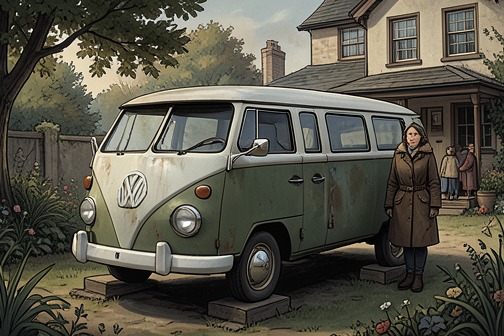
The breakthrough in the investigation of [Frank Brennan](entity:character-recall-character-frank-brennan-b0f94bebc8d9)’s identity is a chain of independent recollections that converts a photograph and a long-missing Volkswagen Kombi into a more specific trail. [Department Q](entity:organization-recall-organization-department-q-6fa26a84f675) learns that Brennan used the vehicle, finds people who remember him under the name Frank, and finally receives the name of the Swedish academy he founded. The advance matters not because one witness knows everything, but because separate fragments—family history, a childhood memory, a commune, an affair, and an academy—begin to converge.
## The Kombi points back to a family
A report about Kitte Poulsen supplies an early, concrete lead. Her father, Egil Poulsen, had been an active peace activist until the mid-1980s. He was dead, but his wife still lived in the couple’s old house, and Kitte remembered seeing the Kombi when she came home for [Christmas](entity:time-recall-time-0cffe7da2c4d). It had since been put on blocks in the garden in [Brønshøj](entity:location-recall-location-br-nsh-j-dc71effe2c1b). The vehicle was no longer merely an image connected to the case: it had a family history and a possible location.
The detail arrives with the force of an unexpectedly practical answer. After the press conference, [Carl Mørck](entity:character-recall-character-carl-m-rck-87d0acc1494d) reflects that Department Q has obtained a response in less than two weeks, where people on [Bornholm](entity:location-recall-location-bornholm-ba560d38c175) and much of the island’s police force had failed for seventeen years. The speed of the lead does not itself solve the case, but it changes its direction. A vehicle associated with the man in the investigation can now be sought through a named family and a place, rather than through a general appeal for recognition.
## A remembered boy becomes a possible Frank
On Monday, May 12, 2014, [Assad](entity:character-recall-character-assad-d8dad8cf0e48) reports having spoken with Kate Busck. Carl has sent her a scan of a photocopy of the photograph, giving her a direct image to consider while they talk. Busck remembers a youngster who helped collect leaflets for demonstrations: a handsome young man who spoke continually about peace. She recalls that he was apparently called Frank, though people called him the Scot. She cannot explain the nickname; what she can say is that he spoke perfect Danish.
The identification remains qualified. Busck recognizes the man in Habersaat’s photocopy despite having seen him only as a boy, and her judgment is that he could be the person pictured, not that the match is beyond doubt. Carl notices that limitation. The scene preserves the difference between recognition and proof, while still making the memory useful: Frank is no longer only an unidentified adult in a photograph but a peace-minded youth with a distinctive nickname and a connection to demonstrations.
## The commune and the chronology
[Gordon](entity:character-recall-character-gordon-2c4ce0d1e3ff) adds a second kind of memory. Busck and the man had lived together in a commune in [Hellerup](entity:location-recall-location-hellerup-04c1a1c50b95) called Ærenspris. It followed a late-hippie ideal, with macrobiotic and microbiotic food, a shared economy, and communal clothing; its members all took Ærenspris as their surname. The experiment did not last. It had disbanded fifteen or sixteen years before Gordon’s account, and Busck had apparently been the only one to retain the name over the longer term.
Busck cannot place Frank’s stay there precisely, but she believes it was in 1994 or 1995. She remembers that he celebrated his twenty-fifth birthday in the commune. That recollection fits Department Q’s calculation that the man would be about forty-five at the time of the investigation. The age is not established by a document in this account; it emerges from joining a remembered birthday to a tentative period of residence. The commune thus supplies both a social setting and a rough chronological check, while the shared surname explains why a witness’s later name might not match the one the investigators are seeking.
## Brennan is connected to the Kombi
The name becomes firmer when Carl tells [Rose](entity:character-recall-character-rose-154df6dd1d30) that the man was Frank Brennan. Dagmar Poulsen nearly died when the name was mentioned, and the investigators learn that she had had an affair with him. Her account confirms what they already understood of his appearance and personality and adds a significant detail about the vehicle: Brennan used the VW from the spring of [1997](entity:time-recall-time-1997-83fe85347f22). He had rented it rather than borrowed it.
Dagmar thought the rental might have followed her husband’s discovery of the affair, which would have made him unwilling to lend the vehicle to the young man. She was not certain, however, and the subject was never discussed between them. That uncertainty is important to the trail: the affair, the rented Kombi, and its timing are connected by Dagmar’s recollection, but her explanation of why it was rented remains a supposition. The vehicle’s reported history can therefore corroborate Brennan’s link to it without turning a witness’s guess into an established motive.
## From a name to an institution
A further witness tells Carl that he has not seen Brennan for years, although for a time he followed him from a distance. He knows that Brennan founded an academy based in [Sweden](entity:location-recall-location-sweden-0f697902ba54) and gives Carl a handwritten sheet identifying it as the [Nature Absorption Academy](entity:location-recall-location-nature-absorption-ac-6e3eeffd9c78), run by [Atu Abanshamash Dumuzi](entity:character-recall-character-atu-abanshamash-dum-7af307b1847a), with its head office on [Öland](entity:location-recall-location-land-9a789f8dc32f). The information carries the inquiry beyond the places where Brennan was remembered as a young man. It offers a named institution and a current geographical lead, rather than another uncertain recollection of his past.
Taken together, the clues make the breakthrough cumulative rather than absolute. The childhood witness recognizes the photograph only tentatively; the commune dates and birthday are recalled approximately; Dagmar’s explanation for the rental is explicitly uncertain. Yet these accounts intersect around Frank Brennan: his peace activism, his years in Hellerup, his relationship with Dagmar, his use of the VW in 1997, and his later founding of an academy in Sweden. The investigation advances by keeping those distinctions intact—what a witness remembers, what the detectives calculate, and what remains conjecture—while each new detail gives the next one somewhere to attach.
Event 27
Carl's Hypnosis Session with Kazambra Reveals a Lead to the Academy
[Carl Mørck](entity:character-recall-character-carl-m-rck-87d0acc1494d)’s hypnosis session with [Albert Kazambra](entity:character-recall-character-albert-kazambra-b3a36bd939b8) turns an uncomfortable, transactional visit into a breakthrough in the search for [Frank Brennan](entity:character-recall-character-frank-brennan-b0f94bebc8d9). After the session leaves Carl feeling unexpectedly relieved, Kazambra recounts Frank’s earlier visits, describing a man who feigned trance, pursued hypnosis as a means of influence, and intended to build something far more ambitious than a small following. His account ends with a name, a location, and a leader: the [Nature Absorption Academy](entity:location-recall-location-nature-absorption-ac-6e3eeffd9c78), headquartered on [Öland](entity:location-recall-location-land-9a789f8dc32f) in [Sweden](entity:location-recall-location-sweden-0f697902ba54) and run by [Atu Abanshamash Dumuzi](entity:character-recall-character-atu-abanshamash-dum-7af307b1847a).
## The Visit and Its Price
Kazambra’s house in Tulstrup had recently been renovated and stood out as the flashiest in town. The setting suited his reputation for charging heavily. When he let Carl, [Rose](entity:character-recall-character-rose-154df6dd1d30), and [Assad](entity:character-recall-character-assad-d8dad8cf0e48) into the corridor, he insisted that they come in one at a time. Carl clarified that the police had come to ask what Kazambra knew about Frank Brennan. Kazambra agreed to discuss Frank, but pointed out that he had already arranged with Rose not to work for free. Carl objected that the [Danish police](entity:organization-recall-organization-61db60ff8ef5) did not pay for information and gave Rose a reproachful look; the disagreement made the visit feel less like a straightforward police interview than a negotiation whose terms had been settled without him.
The session order sharpened that discomfort. Rose went first, followed by Carl, while Assad remained to be seen. Carl sat opposite the coughing Kazambra in a dim room lined with oak bookshelves from floor to ceiling. Their wary scrutiny and the quiet contest of whispers, growls, and stares left Carl ill at ease. He had more than twenty years in the police service, but that experience did not make the encounter comfortable. Then, in Carl’s account of the session, everything disappeared.
## Carl’s Experience
Afterward, Carl waited with Rose in Kazambra’s lobby for Assad to emerge. He felt strangely relieved, as though a weight had been lifted. Kazambra cautioned that a reaction could follow and suggested they could discuss it later, but reassured him that they were on the right track. Carl would ordinarily have pressed to learn what had been done to him and what had been said during the session. At that moment, however, those questions seemed unimportant beside the good feeling that remained.
That response marks a change in the encounter’s immediate balance. Carl had arrived protesting the payment arrangement and watching Kazambra with professional suspicion; afterward, he did not insist on an account of the procedure. The text establishes his relief and his temporary lack of curiosity, but does not specify what occurred in the hypnosis beyond the sudden disappearance he experienced. The scene therefore keeps the session’s mechanics obscure while making its bodily and emotional aftermath clear.
## Kazambra’s Account of Frank
Kazambra said that he had not been in contact with Frank for years, but remembered him distinctly from their meetings in the summer of 1998, a painful period following the death of Kazambra’s wife, Helene. Frank had made a frightening impression. According to Kazambra, he was the only person in the hypnotist’s long career whom he had been unable to hypnotize. The more disturbing discovery came later: Frank had not come to be rid of a burden, as clients commonly did, but to be filled up. By the second visit, Kazambra believed Frank was watching and learning the art without intending to use it only for good.
Kazambra suspected that Frank wanted hypnosis as an instrument for dominating the people around him. He described him as unusually capable of manipulating others and recalled a woman who followed him with the devotion of a puppy, apparently as though she too had been hypnotized. She spoke Swedish with a Finnish accent, was slender and sinewy, and had henna-dyed blonde hair. Kazambra remembered her as inwardly troubled and not at ease with herself. He supplied these identifying impressions but did not name her in the conversation.
The account also explains why Kazambra eventually ended their work. On Frank’s third visit, he refused to receive him again. By then, Kazambra was certain that Frank had been pretending to enter a trance during their sessions, and he had learned enough about Frank’s plans to find them alarming. Kazambra distinguished Frank from people who sought to gather a modest circle of followers: Frank spoke of the disintegration of the great religions and new paths for humanity, and appeared systematic, determined, and possessed of a much larger ambition. Kazambra emphasized that ending the sessions had been his decision. His apparent relief in recounting the history suggests that the disclosure also served as a confession of what he had witnessed and of his own part in it, though he had ultimately refused to continue.
## [The Academy](entity:location-recall-location-the-academy-15b158374102) Lead
Kazambra could not say that he had seen Frank since those encounters. He had, however, followed him from a distance for a time and learned that Frank had founded an academy in Sweden. He handed Carl a sheet of paper bearing a concise note in his neat handwriting: the Nature Absorption Academy, run by Atu Abanshamash Dumuzi, with its head office on Öland, Sweden.
The written lead transformed Kazambra’s recollection into something the investigation could pursue. Carl’s reaction was immediate: he thought he could have squeezed Kazambra, then judged the money spent that day to have been exceptionally well spent. The identification of the academy also made the name Atu newly significant to him. The scene thus joins two kinds of disclosure: Kazambra’s account explains the threat he had perceived in Frank years earlier, while the paper supplies the investigators with an institution, a Swedish island, and a named leader to follow.
Event 28
Pirjo Imprisons Shirley and Attempts to Kill Her
[Pirjo](entity:character-recall-character-pirjo-a806ff3176e3)’s attempt to eliminate [Shirley](entity:character-recall-character-shirley-569eba7b10e5) begins as an apparent invitation into the office and a plan to use exposed electrical wiring. When that approach proves unreliable, Pirjo shifts from an improvised trap to a false offer of work and purification, concealing her intention to remove Shirley behind the Academy’s language of welcome and belonging.
## The First Attempt
Pirjo asks Shirley to enter the office first, calculating that if the first shock paralyzes her and she falls, Pirjo will not be able to lift her. She considers fetching a cable kit from the garage and connecting Shirley to it, but doubts whether the improvised arrangement would work: the fuses might blow, or something might short-circuit. Even as she recognizes the plan as insane, she tells herself that Shirley has to go.
In the control room, Pirjo pulls on a rubber glove and prepares to push Shirley’s hand into the exposed junction-box wires. She warns that the electrician has removed the cover plates, presenting the danger as an accident waiting to happen. But Shirley is unimpressed. She explains that the current is direct and the effect is too weak to kill under the circumstances; a fatal result would require her to be unconscious, with positive and negative wires attached to opposite sides of her body. Shirley adds that direct current would otherwise cause only a sting at that time of day, though the rising power might make the setup different when the sun was stronger. She even offers to replace the cover plates because the open boxes are unsafe.
Shirley’s practical knowledge stops Pirjo’s hand. Stunned, Pirjo accepts her offer to screw the cover plates back on and asks how she knows so much. Shirley explains that her father was an electrician and had entertained the family with such information. The attempted electrocution thus turns on a reversal: Pirjo has arranged the room as a trap, but Shirley recognizes its limits and takes control of the immediate danger.
## A False Offer of Belonging
With the electrical trap foiled, Pirjo changed tactics. She worried that Shirley might produce convincing proof against her and the [Nature Absorption Academy](entity:location-recall-location-nature-absorption-ac-6e3eeffd9c78) just as [Danish police](entity:organization-recall-organization-61db60ff8ef5) arrived; at the same time, her growing, kicking baby intensified Pirjo’s determination to prevent anything from harming them. She placed her hand on Shirley’s and presented herself as someone who understood the pain of being rejected. The gesture and apparent sympathy were part of a calculated attempt to make Shirley accept a new proposal.
Pirjo suggested that Shirley recruit course members from the Academy’s [London](entity:location-recall-location-london-420923d4a60a) office, as [Valentina](entity:character-recall-character-valentina-13ad2fe56dc8) had been assigned to do from Barcelona. The job, she said, would be paid on commission and came with a small apartment—an appealing prospect for someone who would otherwise return to unemployment. But the offer carried a condition: before beginning, Shirley would have to undergo the Academy’s purification process, including a month in isolation devoted to letting nature absorption settle within her. Pirjo framed this confinement as preparation for a place in the inner circle that Shirley had just been refused, turning exclusion into an ostensible route back in.
Shirley’s silence gave Pirjo no assurance that the deception had worked. She scrutinized Shirley’s face for the sequence of reactions she believed could distinguish genuine emotion from calculation, but found it blank. The scene therefore leaves the offer unresolved: Pirjo has replaced a visible electrical danger with a promise that would place Shirley under the Academy’s control, while she still cannot tell whether Shirley is persuaded or resisting.
## Confinement and Escalation
By the second day of Shirley’s captivity, Pirjo was measuring the danger not only to her prisoner but to the secrecy of the crime. The house stood several hundred meters from the new timber circle, and Pirjo judged it remote enough that Shirley’s cries could not reach the workmen. But one man had walked toward the house, and the possibility that others might follow made the distance feel less secure. Pirjo estimated that Shirley’s shouting would lose much of its force after four or five days of exhaustion, while death from starvation might take at least twenty days. The gap between those estimates exposed the weakness of the plan: Shirley could remain audible, and potentially discoverable, for far too long.
Pirjo considered quicker ways to kill her, including poisoning her or rendering her unconscious and cutting her wrists, but each seemed to carry a risk of discovery. She worried that Shirley’s body would remain difficult to move, that someone might find it before Pirjo could conceal it, or that Shirley had left incriminating messages in the house. Her original scheme was to let Shirley die from refusing food and water, then break down the door and place the key in her hand so the death might look like suicide. The intended disguise depended on both the body and the scene being found on Pirjo’s terms.
Instead of carrying out that plan immediately, Pirjo went back to the house to turn off the water main behind it. Depriving Shirley of water would hasten her death, while also leaving her less able to extinguish a fire if Pirjo later chose that alternative. Pirjo considered using surgical spirit and a match when the others were away from the Academy, but treated the timing and the danger of leaving evidence as unresolved problems. The water supply became the concrete escalation: after three days, Shirley had run out of reassuring explanations for Pirjo’s absence, and the sudden stop of the tap made her fear that she had been abandoned deliberately. Searching her bag, she also found that the shoes with large buckles, nail scissors, and file were missing; the omissions confirmed her suspicion that she was not meant to leave alive. She connected the threat to [Wanda Phinn](entity:character-recall-character-wanda-phinn-b2f5c4ae9ed5)’s disappearance from the Nature Absorption Academy, though she could not yet know what had happened to Wanda or where she was.
## The Mechanics of Entrapment
The sequence makes the danger legible through practical details rather than a single open attack. Exposed wires, a glove, the control-room gauge, a locked house, a water main, and the missing objects in Shirley’s bag each belong to an ordinary working world; Pirjo turns them into parts of a scheme whose success depends on managing what Shirley can touch, drink, and eventually have discovered. The change from electrical current to deprivation also changes the scale of the threat: the first trap is immediate and visible, while the later plan relies on isolation and delay.
That delay exposes a contradiction in Pirjo’s effort to make Shirley disappear without attracting notice. She needs time for the death to look self-inflicted and for the body to be concealed, yet the same interval leaves room for Shirley’s cries to be heard and for someone to approach the house. [The Academy](entity:location-recall-location-the-academy-15b158374102)’s promise of purification and inclusion supplies a social disguise for exclusion; confinement strips that language down to its consequences. Shirley’s recognition that she is not expected to leave alive marks the point at which the apparent offer of belonging can no longer obscure the physical reality of the threat.
Event 29
Murder of Alberte
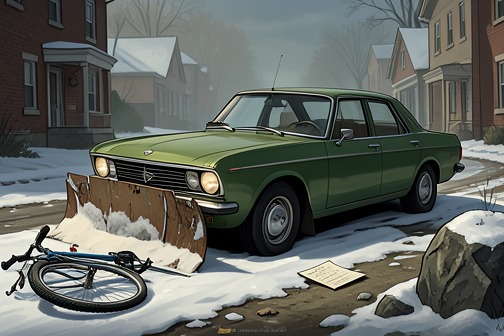
The murder of [Alberte Goldschmid](entity:character-recall-character-alberte-goldschmid-6bdc83927ee1) was a carefully staged hit-and-run, not the accident it had appeared to be. In her confession, [June Habersaat](entity:character-recall-character-june-habersaat-fee7d618d297) described how she lured [Alberte](entity:character-recall-character-alberte-ce5fb59d6bf2) to a familiar roadside spot with a forged note, then drove into her and her bicycle using a car fitted with a homemade snowplough.
## The lure and the preparation
June said she knew Alberte went to the spot by a boulder every morning before the others were up, even when there was no particular reason to go. She characterized Alberte as treating it like a game. Taking advantage of that routine, June left a note beneath the boulder very early in the morning, before driving to [Aakirkeby](entity:location-recall-location-1f1b9b1e587a). She said she could imitate [Frank Brennan](entity:character-recall-character-frank-brennan-b0f94bebc8d9)’s handwriting, making the note appear to come from him and giving Alberte a reason to be there.
June prepared a vehicle and an attachment to make the collision look different from an ordinary impact. She borrowed her son’s car while he was working at a workshop in Aakirkeby; he usually left it outside his sister’s house, where he ate lunch each day. To prevent the impact from leaving a mark on the car, June took the snowplough her son had welded himself from the garage at home in [Listed](entity:location-recall-location-listed-d7e03d9bf560). She drove to Jernbanegade and attached the plough to the Toyota’s fender, where it fitted its intended mounting.
## The collision
June described Alberte as standing at the roadside when she arrived. She made it appear that she was steering around her, and Alberte smiled at the driver and the snowplough’s inscription, despite there being no snow and [Christmas](entity:time-recall-time-0cffe7da2c4d) still more than a month away. June then jerked the steering wheel and drove into Alberte, striking her first and her bicycle afterward.
The timing helped June avoid witnesses: she said it was very early in the morning and that people on [Bornholm](entity:location-recall-location-bornholm-ba560d38c175) took things slowly. Her account makes the apparent chance encounter part of the plan. Alberte’s routine brought her to the roadside; the forged handwriting supplied the invitation; and June’s feigned attempt to pass safely preceded the deliberate turn into her.
## Conflicting accounts and disclosure
In a separate confrontation, [Pirjo](entity:character-recall-character-pirjo-a806ff3176e3) accused Atu of running Alberte down with a Volkswagen Kombi and using a sign attached to its front to fling her into a tree. Pirjo also said she had disposed of the sign by burning it. These were Pirjo’s accusations to Atu, whereas June’s later account identified her own actions and described the Toyota and its snowplough attachment. The distinction matters: the collision had been surrounded by competing claims, and June’s confession disclosed a specific method and motive for the apparent accident without turning Pirjo’s accusation into established fact.
June’s account also explains how an ordinary object became part of the deception. The snowplough was made by her son, taken from a garage in Listed, and fitted to the Toyota at Jernbanegade; its inscription helped draw Alberte’s attention just before June struck her. The revelation recasts the roadside scene from misfortune into a planned killing, with Alberte’s familiar morning habit and trust in the supposed message used against her.
Event 30
Christian Habersaat's suicide
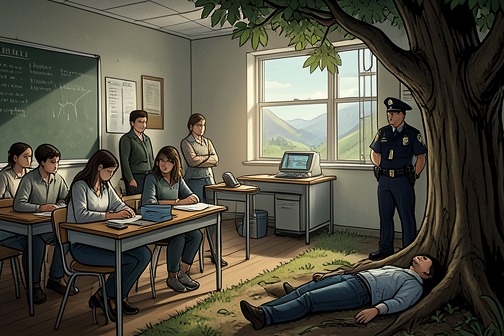
[Christian Habersaat](entity:character-recall-character-christian-habersaat-943273d2076f)’s suicide at his retirement farewell marks the point at which an old investigation passes into the hands of [Carl Mørck and Assad](entity:relation-recall-relation-carl-m-rck-and-assad-fb2a3d07ebd5), but its significance changes as they uncover what Habersaat had been unable to resolve. At first, the death seems to explain only why the case has been abandoned; later, the pistol and Habersaat’s final letter turn it into evidence of a father’s belated recognition that his own son committed [Alberte Goldschmid](entity:character-recall-character-alberte-goldschmid-6bdc83927ee1)’s killing.
## The Cold Case Behind the Suicide
The history leading to Habersaat’s final act began on [November 20, 1997](entity:time-recall-time-november-20-1997-497654dd2b0e), at [Bornholm Folk High School](entity:location-recall-location-bornholm-folk-high-s-c925391e5922). For roughly fifty students, the day had been ordinary: they attended courses in music, glasswork, painting, or pottery, and, as [John Birkedal](entity:character-recall-character-john-birkedal-51831978fc72) later explained, the mostly young group had been in good spirits and felt no danger. [Alberte](entity:character-recall-character-alberte-ce5fb59d6bf2), described as among the gentlest, prettiest, and most popular students, had already been killed in a traffic collision that morning. She was not found until more than a day later, thrown high into a roadside tree and nearly invisible. The person who looked up at just the right moment was a uniformed police officer: Christian Habersaat.
Habersaat’s connection to the case did not end with that discovery. Years later, [Inge Dalby](entity:character-recall-character-inge-dalby-4c2ce5c406b8) recalled that he repeatedly asked her about the name of the man Alberte had been seeing. She had already given the police her account, but Habersaat returned to the question during his rounds at the school, seeking the same information again. Inge could remember only fragments: Alberte had once remarked that the man’s name sounded exotic, and it contained several parts, one of them biblical. She also remembered that he apparently came from [Copenhagen](entity:location-recall-location-copenhagen-aea5870325a0) and drove a Volkswagen van, though she could not confirm that a photograph shown to her depicted the same vehicle.
These fragments show the persistence of Habersaat’s inquiry, not that he had solved it. When Carl and [Assad](entity:character-recall-character-assad-d8dad8cf0e48) took over after his death, the case still required investigation. Habersaat’s repeated questions had left a trace in witnesses’ memories, but those memories were incomplete and uncertain. His suicide therefore made the investigation both an inheritance and a problem: the detectives had to distinguish useful recollection from the assumptions and unanswered suspicions that had accumulated around the case.
## The Retirement-Farewell Death
The book identifies Habersaat’s death as a suicide at his retirement farewell. Carl initially resists making the reason for it the focus of the detectives’ visit. He tells Assad, by a look, not to pursue whether Habersaat used one pistol or another; to Carl, the weapon seemed irrelevant to the work they had come to do. He believes their more immediate task is to make [Rose](entity:character-recall-character-rose-154df6dd1d30) understand that the Alberte investigation is not theirs simply because she thinks they should have taken it on for Habersaat. That early impatience frames the suicide as an interruption to [Department Q](entity:organization-recall-organization-department-q-6fa26a84f675)’s work rather than its central mystery.
The weapon nevertheless becomes significant. A policeman tells Carl that a relative of a teacher who had died at the school remembered the teacher owning two nearly identical pistols. Habersaat had obtained one and used it to kill himself; the second had never been found, not even among his possessions. Carl dismisses the distinction at first, reasoning that the presence of another pistol would not explain much in a country where gang members could readily have guns. The detail matters less as a clue to the mechanics of the suicide than as a reminder that Habersaat’s death had left uncertainties the investigators could not simply wave away.
Habersaat’s death also alters the way witnesses encounter the reopened inquiry. When Carl tells one of them that the investigator she had spoken to years earlier has committed suicide, the news appears to make little impression; she may barely remember him. Yet when Rose recounts his sustained interest in the case and the witness’s earlier questioning, the woman follows closely and seems to remember the interviews. The contrast separates the knowledge of his death from the history of his work: his suicide does not itself unlock the witnesses’ memories, but the old investigation remains present in them.
## Suspicion Turns Toward His Son
As the inquiry develops, Rose proposes a darker explanation for Habersaat’s persistence. He had been a policeman and had devoted seventeen years to the case; she believes he may have suspected his own son and pursued the investigation in order to remove that suspicion. In her theory, blaming the person he hated most—his wife’s lover—would have offered a convenient alternative. Carl challenges the theory by asking why Habersaat would have directed Department Q toward the case if he wanted it forgotten after his suicide. At this stage, the detectives are weighing an interpretation, not yet stating what Habersaat knew or why he acted as he did.
The eventual disclosure comes in Habersaat’s letter, dated [April 29, 2014](entity:time-recall-time-april-29-2014-ce7bdf30437a). He apologizes for having insisted on pinning the crime on an innocent man when, as he now acknowledges, his son had committed it. He says he is leaving his son’s fate in the investigators’ hands because he cannot bring himself to go after his own child, and declares that the matter stops with him. The letter makes the long pursuit newly legible: Habersaat’s fixation was not simply an inability to let an old case go. It had also become a way of circling the possibility that the perpetrator was his son, while directing suspicion elsewhere.
The letter gives the suicide its decisive narrative consequence without reducing it to a fully explained motive. Habersaat names the truth and admits his failure to act against his son, but the surviving evidence does not establish that this recognition alone caused him to take his life. Instead, the suicide leaves behind an unfinished responsibility that he transfers to the investigators. Carl and Assad must now pursue the case whose burden Habersaat carried for seventeen years, while confronting the familial conflict he could not resolve himself.
## Meaning and Aftermath
The progression from dismissal to discovery gives the suicide a double role. It is first the reason Department Q is drawn into the Alberte case, and then a delayed revelation about why Habersaat pursued it so insistently. The missing second pistol briefly draws attention toward the material circumstances of his death, but the more consequential evidence is not another weapon: it is the letter that identifies his son as the killer and admits that Habersaat could not bring himself to pursue him.
The case thus converts a retirement farewell from an apparent ending into a transfer of unfinished work. Habersaat’s death cannot restore Alberte or undo the years spent accusing an innocent man; nor can his letter settle the son’s fate. It does, however, break the concealment around the central crime. Carl and Assad inherit not only a cold case but the truth Habersaat finally put into writing, and the silence that followed his confession marks the weight of what they have learned.
Event 31
Bjarke Habersaat's suicide
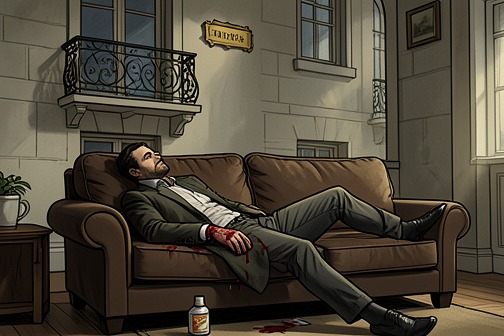
[Bjarke Habersaat](entity:character-recall-character-bjarke-habersaat-5e3e4758129e)’s suicide is both a death and a belated clue: the note he leaves for his father points toward the hidden connection between the [Alberte](entity:character-recall-character-alberte-ce5fb59d6bf2) case and the family’s collapse. The discovery first confronts [Carl Mørck](entity:character-recall-character-carl-m-rck-87d0acc1494d), [Assad](entity:character-recall-character-assad-d8dad8cf0e48), and [Rose](entity:character-recall-character-rose-154df6dd1d30) with the physical fact of Bjarke’s death; its meaning emerges only later, through [June Habersaat](entity:character-recall-character-june-habersaat-fee7d618d297)’s account of what Bjarke knew and why he could not live with it.
## The House and the Discovery
The house on Sandflugtsvej presents an image of carefully maintained provincial comfort. Set back from the road, with a French balcony, brass nameplate, and neatly mown lawn, it seems to announce prosperity through its smallest details. Yet only one name appears on the door: Nelly Rasmussen. She confirms that Bjarke lives there, but cautions the visitors not to expect him to be willing to talk. When Carl, Assad, and Rose enter, the polished exterior gives way to a room clouded by hash smoke and the smell of cellulose thinner.
Bjarke is naked in a large, worn armchair, his legs drawn up and a bottle of paint thinner in his hand. He has slit his wrists and is already dead. The scene is starkly at odds with the house’s display of order: the man inside has withdrawn from every ordinary expectation of care and conversation. Carl identifies the smell as a combination of hash and cellulose thinner, correcting Assad’s initial impression that it was cannabis alone. The medical officer later places the death at approximately four o’clock.
## The Note and June’s First Reaction
The practical work of the investigation followed with startling speed: the police searched Bjarke’s room, seized his computer and the knife he had used to slit his wrists, collected technical data, and arranged the postmortem and removal of his body. Carl had smoked only five cigarettes by the time [John Birkedal](entity:character-recall-character-john-birkedal-51831978fc72) and an investigator appeared with a technician, carrying a scrap of paper sealed in a plastic bag. It bore just three words: “Sorry, Dad.” The note’s brevity made it moving to Carl, but also immediately puzzling. Bjarke’s mother, June, was alive to receive an apology; why, then, had he addressed it to his father?
Carl and his colleagues went to tell June that her son was dead and that he had taken his own life at approximately four o’clock. She absorbed the news in silence, drawing in her cheeks as if confronting her own reflection and the years it revealed. Then she repeated the time and explained that it was just after she had called Bjarke to tell him about his father. She tried to swallow, held her throat, and said no more. The timing linked the suicide to the call in the most immediate way, while the note’s address to his father left the investigators with a question the first notification could not answer.
Carl, Rose, and Assad stayed with June for half an hour. Rose held her hand until Carl indicated that she could let go, and the three began to leave. Before they were out of the living room, Assad challenged June with the mismatch he saw between her account of her failed life and the words Bjarke had left behind. He argued that [Christian Habersaat](entity:character-recall-character-christian-habersaat-943273d2076f) could not be the only explanation for the family’s situation, and asked why Bjarke had written to his father rather than his mother. Carl pulled Assad away, but the question had already struck its mark: June was shocked not only that they knew of the note, but that she resisted believing it could belong to her world. Her reaction made the small scrap more than a farewell. It was evidence of an unresolved family history, and of a truth she could not yet face.
## The Funeral and the Meaning of the Note
The explanation of Bjarke’s apology comes much later, when June is preparing to leave for his funeral. Asked whether he is only being buried now, she explains that his body had remained in [Copenhagen](entity:location-recall-location-copenhagen-aea5870325a0) for the postmortem; this time, as she speaks of the funeral, she sheds a real tear. The delay gives the burial a grim procedural shadow, while June’s tears mark a change from the stunned, guarded woman who first received the news.
June then recounts the secret that had bound Bjarke to the Alberte case. After returning to [Listed](entity:location-recall-location-listed-d7e03d9bf560), she put the plow back in her trunk. [Karin Kofoed](entity:character-recall-character-karin-kofoed-ff98985b4aed) had seen her do it and later told Bjarke that June had borrowed the car and that Karin had seen her with the plow. By then the search for [Alberte Goldschmid](entity:character-recall-character-alberte-goldschmid-6bdc83927ee1) had begun. At the dinner table, Christian Habersaat told the family that he had found Alberte in a tree and that the discovery had left a terrible impression on him. June could tell that Bjarke had worked out what her actions meant. He never told his father, but, as June recalls it, he hated her for the secret and never let her down; instead, he kept the burden to himself. After June moved out a few months later, Bjarke could not remain under the same roof as Christian. He lived for a time with Karin and with June in [Aakirkeby](entity:location-recall-location-1f1b9b1e587a), before finding a place of his own.
June says they never discussed what Bjarke had understood. Her account transforms the note from a baffling farewell into an apology shaped by the family’s concealed past. She believed Bjarke could not bear the thought that Christian had killed himself over a case his son might have solved for him; “Sorry, Dad” was, in her understanding, Bjarke asking his father’s forgiveness. The note therefore points beyond grief at Christian’s death: it carries Bjarke’s knowledge of June’s connection to Alberte’s disappearance, his silence about that knowledge, and his sense that he had failed the father who remained consumed by the case.
## Silence, Guilt, and the Case
June’s explanation remains an interpretation rather than a confession from Bjarke: she believes he apologized because he could not live with the thought that Christian Habersaat had died over a case his son might have solved. That distinction matters. Bjarke’s note establishes whom he addressed, but June’s recollection supplies the reason, drawing on what she inferred from his silence and their family’s separation. His death does not resolve every uncertainty about what he knew; it reveals how long the knowledge, or the suspicion of it, had shaped his life.
The apology also reverses the first impression created by the family’s losses. June had initially linked Bjarke’s suicide to her own phone call about his father, while the note seemed to point toward Christian. In retrospect, she sees both deaths joined by Alberte Goldschmid’s case and by the secret Bjarke never disclosed to his father. His silence had spared Christian an accusation, but left Bjarke alone with the knowledge. The suicide thus turns a few words recovered from a room into the belated sign of a family history organized around concealment, loyalty, and guilt.
Event 32
Shirley's escape from captivity
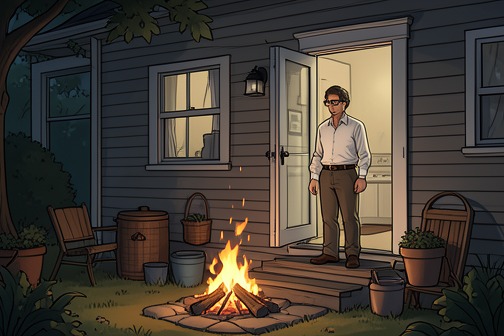
[Shirley](entity:character-recall-character-shirley-569eba7b10e5)’s escape from captivity turns a house where [Pirjo](entity:character-recall-character-pirjo-a806ff3176e3) expects her to die into the site of her rescue. Cut off from water and unable to make herself heard, Shirley uses sunlight, her glasses, and paper from a blue notebook to start a fire. The blaze draws people to the house; when rescuers carry her out, she is still alive.
## Captivity and the Failed Expectation
Four days after Pirjo turned off the water to the house where Shirley was locked up, she heard faint scratching from the walls during an inspection. She did not regard the sounds as alarming. She expected them to stop within days and planned to assume Shirley was dead a week later. In the meantime, Pirjo intended to keep to herself and let time pass. Her confidence in that outcome makes Shirley’s eventual appearance among the rescued a sharp reversal: the faint sounds Pirjo dismissed were evidence that Shirley remained alive.
At the Academy on [Öland](entity:location-recall-location-land-9a789f8dc32f), preparations outside Pirjo’s window carried on as usual. Men were building bicycle sheds, and Pirjo expected the first bikes later that week for a project intended to recruit island residents. She rose for the communal assembly while Shirley remained trapped in the house. The ordinary schedule of construction and assembly unfolds alongside a captivity Pirjo believes is nearing its end.
## Sunlight, Paper, and the Fire
Shirley’s means of escape is small and improvised. She kneels, takes up her glasses, and gathers the sun’s rays into a bright point, first on the wall and then on a crumpled piece of paper from the blue notebook. The paper gradually darkens. The scene makes an everyday object—the glasses—instrumental to survival: Shirley turns them from something she wears into a means of concentrating sunlight and setting fire to paper.
After a hole opens in the skylight, Shirley screams as loudly as she can, hoping someone will hear. She stops after ten minutes; the house is so well insulated that no one has heard her. The fire therefore does not immediately end her isolation. Even with an opening above her, the building’s insulation defeats her attempt to summon help by voice.
Her response to the confinement also departs from what she thinks she ought to feel. Rather than becoming sad and afraid, she laughs briefly at the strangeness of her situation and experiences hunger and thirst as a source of euphoria, feeling light, free, and strong. That moment does not remove the danger, but it accompanies the practical effort that gives her another chance of being found.
## Rescue and Reversal
The fire eventually brings people to the scene. Voices from the courtyard call out that there is a fire. By the time Carl sees the aftermath, the community is gathered around a dead woman, while white-clad men and women stand nearby, crying and disoriented. The account does not identify that dead woman as Shirley; instead, a stretcher team arrives from the fire carrying Shirley alive.
Shirley is given oxygen through a mask and an intravenous drip as rescuers hurry her past the onlookers. She reaches out to touch people’s hands, receiving only a few strokes of her fingers in return. The commander directs that she be taken in one ambulance, the dead woman in another, and the Danish officers in an emergency car. Shirley’s survival overturns Pirjo’s expectation that the scratching would cease and the captive would be dead. The fire that did not make her first cries audible ultimately makes her escape visible to the people who can carry her out.
Event 33
Pirjo's attack on Carl and Assad
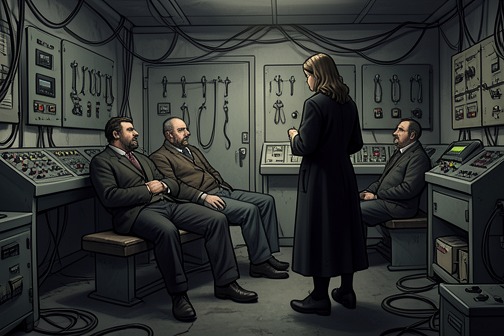
[Pirjo](entity:character-recall-character-pirjo-a806ff3176e3)’s attack on Carl and [Assad](entity:character-recall-character-assad-d8dad8cf0e48) turns their investigation into a struggle for survival. After Carl and Assad privately weigh whether they can unsettle Pirjo enough to make progress, a heavy rubber mallet swings toward Assad; the next blow strikes Carl before he can intervene. Carl catches only a glimpse of Pirjo bending over him. The assault is sudden, but what follows is methodical: Pirjo uses the control room’s equipment to restrain both men and make the building’s solar system part of the attack.
## The Assault and the Trap
When Pirjo returns to the control room, both men are down, although Assad is beginning to lift his head. She binds his arms with non-insulated cable, then secures him to a bench by his ankles and thighs and fastens his body to old butcher’s hooks on the wall. She repeats the process with Carl, who is limp and difficult to move. Feeling sick, she pauses to recover before tying the two men together with the cable and inspecting her work. The careful sequence leaves them unable to get free or help one another.
Pirjo checks the car keys in the larger man’s pocket and considers how the scene might be explained. The electrician is not expected back for several days, giving her time, and she expects Nisiqtu to believe her account that the men caused the accident themselves. The imagined cover story makes the attack more than an impulsive assault: Pirjo is preparing both to keep the men captive and to shape what others will think happened.
She then cuts separate lengths of cable and winds one around Assad’s thumb and another around Carl’s left ankle. At the junction box, she opens the connections carrying direct current from the solar panels to the inverter. An electrician and [Shirley](entity:character-recall-character-shirley-569eba7b10e5) had unknowingly shown her how the system could be used to inflict pain: in weak sunlight the current would sting, but stronger sunlight would make it more dangerous and could eventually kill them. Pirjo loosens the cable lugs with an insulated screwdriver, setting the trap so that its force depends on the light reaching the panels.
## The Current and Its Effects
Once Pirjo connects the men to the solar system, the danger fluctuates with the sunlight. Carl experiences the current first as a bubbling sensation through his body, then as muscles contracting and locking, even in his eyelids and nostrils. His heart skips beats, flashes interrupt his thoughts, and his lungs struggle; as more light comes through the clouds, the current grows stronger. He can barely register Assad beside him, remembering their shared restraint only in fragments.
The current weakens abruptly. Carl sees a trace of smoke and then Assad’s bound arm twitching toward the metal wall: Assad has pressed the thumb wrapped in cable against it, and the current is no longer traveling farther. The moment turns the apparatus against Pirjo’s plan, though it does not immediately free them. Carl later wakes on the cement floor, shaking and sick, with the cable cut into pieces, a wire cutter nearby, and the corridor door open. His ankle aches and his breathing is troubled, but he is alive; Assad has saved him.
## Immediate Aftermath
Once free, Carl tries to steady himself with water, but swallowing is difficult and his head keeps swaying until he holds it still. His left ankle hurts as though it has been cut, and mucus catches in his lungs. Even as the shock leaves him shaky and sick, his attention turns to Assad: Carl thinks he will be all right as long as they can help his partner. He begins to feel better within ten minutes, but survival has not yet resolved the immediate question of whether Assad can be saved.
## The Trap’s Reversal
The attack’s decisive reversal comes not from a planned countermeasure but from Assad’s limited movement while still bound. The same cable that makes his body part of Pirjo’s electrical circuit also gives him a point of contact with the metal wall; by pressing his wrapped thumb against it, he stops the current from traveling farther. The distinction between the men’s helplessness and Assad’s small, precise action turns the apparatus against its intended effect. Yet the interruption is only a reprieve: Carl wakes later on the cement floor, free of the cable but still shaking and struggling to breathe, and immediately understands that Assad still needs help. Their survival therefore remains uneven—the man who saved Carl is himself in danger.
Event 34
Pirjo's death
[Pirjo](entity:character-recall-character-pirjo-a806ff3176e3)’s death is the consequence of a crisis in which her concealed pregnancy, her commitment to Atu, and her attempt to control what the investigators will learn converge. She intends to die while taking responsibility for everything and leaving [Carl Mørck and Assad](entity:relation-recall-relation-carl-m-rck-and-assad-fb2a3d07ebd5) unable to contradict her. Instead, the official account establishes that she dies from blood loss during premature labor, and that her child does not survive.
## The crisis and attempted escape
The sequence begins with Pirjo reaching for the telephone to call an ambulance. If help arrived quickly, she expected to be in the gynecological ward in [Kalmar](entity:location-recall-location-kalmar-8a99e09f4567) within forty-five minutes. The call marks a moment when medical care still seems possible; her attention is on getting to hospital, not yet on the plan she later forms. The evidence does not establish what prompted the call or how much time passed before her decision changed.
For a few seconds Pirjo trembles. Then she experiences an abrupt cessation of the bodily signals she had been monitoring: the beat of her pulse, movement in her uterus, and other signs she associated with her condition. The narration records this as her perception, rather than a medical diagnosis. In that silence, she concludes that there is only one way out. She will sacrifice herself for Atu once more, this time with her life, and write an account that assigns her responsibility for everything.
## Her plan and the men in the room
Pirjo’s intended written account is also a plan for controlling the aftermath. She expects that the men in the room will not be alive to dispute what she writes, and treats their fate as bound to hers because they have come too close. The passage presents this as her decision, not as proof that she completed the account or that her intended explanation would be accepted. Her aim is to make her own death serve Atu while removing the witnesses who could challenge her version of events.
The subsequent identification clarifies who those men are in the immediate aftermath: Carl Mørck and Assad are asked to identify the dead woman as the person who knocked them out and tied them up. The account thereby places Pirjo’s death within the same confrontation as her effort to control what could be said about it. Her plan depends on the men’s absence; their survival allows them to identify her and ties her directly to their restraint. The evidence establishes that they were incapacitated and bound, but does not detail the mechanics of the confrontation here.
## Death and forensic findings
As Pirjo is dying, sunlight reaches her office. She interprets its strength as capable of killing the men. The belief belongs to her experience of the moment; the later medical finding gives a different, specific explanation for her death. Her neck muscles then slacken, her chin falls, and her shaking stops. The narration presents this as the end of her remaining strength, before the forensic examination supplies the cause.
After Carl Mørck and Assad identify her, technicians photograph the scene. A forensic pathologist issues a temporary death certificate and concludes that Pirjo died from extreme blood loss caused by bleeding during premature labor. He also checks for signs of life in the child and determines that the child has died. These findings distinguish the medical cause from Pirjo’s intended account: she had meant to write that she was responsible for everything, but the reported cause of death is a complication of premature labor. The evidence does not say whether she managed to write anything before dying.
## Consequences and significance
The immediate outcome is two deaths: Pirjo’s and that of her unborn child. Her decision to make herself a final sacrifice for Atu does not give her control over how the event is ultimately recorded. The investigators live to identify her, and the pathologist’s findings establish a cause of death that is not the explanation she had planned to leave behind.
The scene’s force comes from the contrast between Pirjo’s attempt to turn death into a deliberate message and the physical and forensic evidence that limits what can be claimed. Her intended confession is a projected act; her death and the child’s death are confirmed outcomes. The distinction leaves her motive and loyalty visible without treating her intended version as an established account of the events. Her ending is therefore both personal and evidentiary: a last attempt to protect Atu becomes a death documented through identification and medical findings.
Event 35
Atu's shooting at Bjarke's funeral
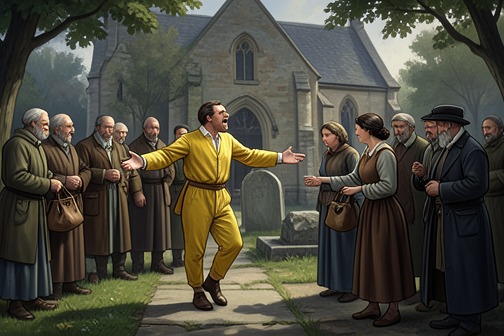
At [Bjarke Habersaat](entity:character-recall-character-bjarke-habersaat-5e3e4758129e)’s funeral, [June Habersaat](entity:character-recall-character-june-habersaat-fee7d618d297) kills [Atu Abanshamash Dumuzi](entity:character-recall-character-atu-abanshamash-dum-7af307b1847a)—also known as [Frank Brennan](entity:character-recall-character-frank-brennan-b0f94bebc8d9)—with a pistol beside the open grave. [Carl Mørck and Assad](entity:relation-recall-relation-carl-m-rck-and-assad-fb2a3d07ebd5) witness the shooting but cannot prevent it; the scene ends with Atu dead and June fleeing, while a connection to [Christian Habersaat](entity:character-recall-character-christian-habersaat-943273d2076f)’s missing pistol gives the killing a further link to the case’s history.
## The Funeral and the Approach
The burial was nearly over when Carl Mørck and Assad reached the churchyard. About a hundred meters ahead, Atu, dressed in yellow, was walking directly toward the mourners gathered at the graveside. They hurried after him, caught between two risks: moving too quickly might make him turn and flee again, but they also needed to protect June Habersaat from whatever he intended. The funeral’s ordinary closing gestures had already begun: the vicar had set aside his small shovel, and the mourners had thrown earth onto the coffin.
June went to the edge of the grave and dropped something in, prompting an audible reaction from those who saw it. She then reached into her bag. Atu called her name in a desperate voice; the mourners recoiled in surprise as he stretched his arms out toward her. Carl and [Assad](entity:character-recall-character-assad-d8dad8cf0e48) quickened their pace, but they could not reach the pair before June drew a large-caliber pistol.
## The Shooting and Its Immediate Aftermath
June fired what sounded like four or five times. The shots echoed against the church walls, and Atu doubled over before collapsing beside the grave. The narration identifies the killing as an execution, premeditated rather than accidental: the mourners’ sudden retreat had opened a space between the armed June and the approaching Atu, while Carl and Assad were still closing the distance. They stopped where they were. Carl had not been armed for a long time, and the scene’s brief delay between seeing the pistol and hearing the shots became the measure of how little they could do to intervene.
June seemed stunned by the speed of what had happened. Her gaze moved between Atu’s body, the bottom of the grave, the mourners, and the vicar, who approached her with calming words. The priest checked Atu’s pulse at the neck and shook his head: Atu was dead. Carl saw him lying with one foot over the grave, his eyes wide open; the yellow shirt had two deep holes in the stomach and another in the shoulder. One bullet had passed through near the tattoo reading RIVER, a detail Carl recognized. The grave, the burial, and the dead man’s tattoo converge in this moment, but the immediate fact is stark: the gathering has become the scene of a killing witnessed by the mourners and the investigators.
## Flight, Symbolism, and the Weapon’s Origin
A sudden impact made June scream; the pistol flew from her hand. She did not look back. Instead, she ran to a bench against the churchyard wall, climbed over the stone boundary, and dropped down toward the road beside the field. Carl sent Assad after her and turned to the stunned mourners, telling one of them to call the police while he went for the car. The shooting thus split the scene in two: Atu remained beside the grave, while June escaped beyond the churchyard and Assad pursued her.
Carl paused over Atu’s body. One foot lay across the grave, his eyes were wide open, and the yellow shirt showed two deep wounds in the stomach and one in the shoulder. The wound near the RIVER tattoo recalled the song associated with Atu, while the place of his death sharpened the scene’s irony. The man who had sought to be a guardian of enigma and a son of the sun had ended his life in the shadow of the island’s famed [Østerlars Round Church](entity:location-recall-location-sterlars-round-churc-aa352770a9c2), a building associated with the Knights Templar’s supposed mystical secrets.
The pistol Carl picked up resembled the one Christian Habersaat had used to kill himself. It appeared to be the second of the two pistols that had belonged to the deceased teacher from [Bornholm Folk High School](entity:location-recall-location-bornholm-folk-high-s-c925391e5922) and had never been found. Carl inferred that Habersaat had taken both weapons, and that June, his former wife, had somehow removed one without his knowledge. The weapon therefore connected the churchyard killing to the earlier death and concealed history of the Habersaat household; June’s escape did not erase the physical clue left behind.
## Narrative Function
The scene is built around a short delay between recognition and action. June’s first movement at the grave prompts a reaction among the mourners, but its meaning remains unclear; only after Atu calls her name and the crowd recoils do Carl and Assad see the pistol. The narration makes the weapon visible just before the shots, preserving the gap between understanding the danger and being able to stop it. That gap defines the event: the investigators reach the funeral in time to witness the killing, but not in time to prevent it. The burial’s closing gestures become the frame for a second death, and the churchyard changes, within moments, from a place of mourning into a crime scene.
Event 36
June Habersaat's confession and suicide
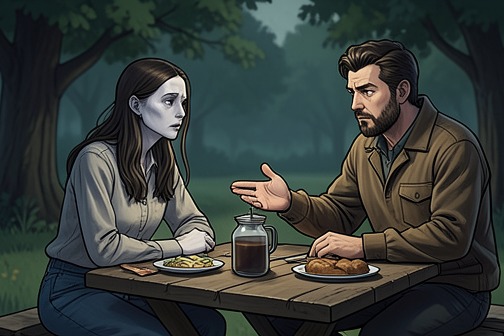
[June Habersaat](entity:character-recall-character-june-habersaat-fee7d618d297)’s confession and suicide resolve the central question of who killed [Alberte Goldschmid](entity:character-recall-character-alberte-goldschmid-6bdc83927ee1), overturning the suspicion that [Bjarke Habersaat](entity:character-recall-character-bjarke-habersaat-5e3e4758129e) was responsible. June explains how she engineered the collision with her son’s car and homemade snowplow, then, facing the prospect of a life sentence, takes her own life by leaping over a cliff. The confession closes the investigation with a reversal; the fall makes that resolution echo the death it has explained.
## The confession and its reversal
Carl leads June to a picnic table and directs her to sit. She has lost considerable weight since he last saw her nearly three weeks earlier: her eyes look large in a hollow face, and her arms seem childlike. After a few minutes of silence, she says she heard everything the woman on the phone said and that it was wrong. Carl signals to [Assad](entity:character-recall-character-assad-d8dad8cf0e48), who has already started recording on his smartphone. Carl tells June this is her chance to explain what happened and assures her they will not interrupt if she does not want them to.
June first says that she allowed [Frank Brennan](entity:character-recall-character-frank-brennan-b0f94bebc8d9) to exert too much influence over her family, and that he ruined both her life and the lives of her relatives. She connects this damage to Bjarke’s suicide, saying he could not endure it after his father had given up. Carl then puts forward the investigators’ existing theory: that Bjarke killed [Alberte](entity:character-recall-character-alberte-ce5fb59d6bf2) out of jealousy, supported by what they have seen of the car and snowplow. June rejects it outright. She identifies herself as Alberte’s killer, not as someone shielding her son. Assad initially refuses to believe her and accuses her of covering for Bjarke. June thumps the table despite her pain, then falls silent, looking toward the hill and forest across the lake. Her insistence is not a vague recantation: she will go on to describe the mechanics of the killing in detail.
## How June engineered the collision
June says she borrowed Bjarke’s car while he was at work in the workshop in [Aakirkeby](entity:location-recall-location-1f1b9b1e587a). He regularly left it in front of his sister’s house because he ate lunch there each day. She recalls this ordinary family routine with a brief smile, an incidental tenderness set against her account of what she did with the car.
To prevent the impact from leaving a mark on the vehicle, June used the snowplow Bjarke had welded himself. It had been lying in the garage at home in [Listed](entity:location-recall-location-listed-d7e03d9bf560). She put it in the back of her own car, drove to Jernbanegade, and attached it to the fender of the Toyota, where it fitted as designed. The device’s purpose was concealment as well as force: it let her strike Alberte while reducing visible evidence on the car. The account turns an object associated with Bjarke’s handiwork into the means by which June carried out the crime and allowed suspicion to settle on him.
Asked how she knew Alberte would meet Frank by the tree that morning, June explains that Alberte went there every morning before the others were awake, even when there was no particular reason to go. June dismisses this as a game and calls the young woman stupid. She then describes making the attack appear, at first, to be an attempt to drive around Alberte. Alberte stood by the roadside and smiled at the driver of a snowplow bearing an inscription, despite there being no snow and [Christmas](entity:time-recall-time-0cffe7da2c4d) being more than a month away. June jerked the steering wheel and drove into her; the car struck Alberte first and then her bicycle. June says it was very early, when people on [Bornholm](entity:location-recall-location-bornholm-ba560d38c175) took things slowly, and confirms that no one saw the attack apart from Alberte. The sequence makes the collision deliberate rather than accidental: the apparent pass, the sudden turn, and the bicycle struck after its rider are all part of June’s account.
## Sentence and final act
As sirens approach the parking lot, June asks Assad directly what sentence she can expect. He estimates ten years to life and tells her that life imprisonment usually means fourteen years. She works out that she would be seventy-six by then, if she were still alive, and says she does not think she would have the will to be. Carl tries to soften the answer by noting that many people have their sentences reduced for good behavior. The conversation establishes the immediate pressure of arrest and punishment, but June’s response does not lead to surrender or a journey to trial.
June reflects that Frank taught her to dream herself away to another place where she would rather be, and that this meant she was no longer happy where she was. The approaching sirens make her imminent transfer to an ambulance under police escort seem close. Then she stands abruptly, runs four steps toward an opening in the wall, jumps down four steps, and takes a final leap over the wall. Carl and Assad lunge after her and reach the outer wall together, too late to stop the fall.
## Echo of Alberte’s death
Far below, Carl and Assad see June’s mutilated body. She has struck the cliff hard and was probably killed on the spot before sliding over the last edge; she now hangs head-down from a tree. The narration makes the resemblance explicit: June ends in a position like Alberte’s seventeen years earlier. That image binds the confession to its consequence without making the deaths identical in circumstance. June has named the person who caused Alberte’s death, but her own final act repeats its stark physical outcome. The investigators obtain the truth, and the woman who supplies it dies before they can take her into custody.
Event 37
Rose's suicide attempt
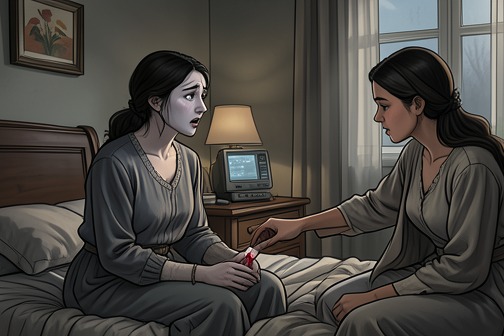
[Rose's suicide attempt](entity:event-recall-event-rose-s-suicide-attempt-d627fc72b151) marks the grave aftermath of hypnosis: a session that had already left [Carl Mørck](entity:character-recall-character-carl-m-rck-87d0acc1494d) with nightmares is followed by [Rose](entity:character-recall-character-rose-154df6dd1d30)'s profound disorientation, self-harm, and admission to hospital. Her sister's account links the crisis to Rose's belief that hypnosis had altered her identity, while leaving the full extent and duration of her recovery uncertain.
## Background and Warning Signs
After the hypnosis, Carl Mørck told his colleague that he had experienced nightmares and kept seeing things he had not thought about for years. He was unsure that the effects would simply pass. Rose's condition was also deteriorating: she had shaken throughout the cab ride home and then sat rocking back and forth. When Carl asked after her, he learned that she was not doing well and was not answering calls.
## Discovery and Crisis
Rose's sister found her in the bedroom after arriving for one of their occasional Saturday tea visits. Rose did not recognize her. She said she had done what she had to do and wanted out of it all, and she had cut one of her wrists with scissors. The episode is presented through her sister's worried report to Carl, turning the earlier concern about hypnosis into an immediate medical emergency.
Rose also claimed to be Vicky, their other sister. In her account, hypnosis had made her believe she was Rose, but she did not want to be Rose because Rose was a bad girl; she said the hypnosis had gone too deep. She further reported that the person responsible had told her he could not help because she was already a full cup. Her confused identification and self-condemnation show how the crisis had taken shape around the imposed identity she described.
## Hospitalization and Significance
Rose was admitted to Nordvang Hospital. Her sister warned Carl not to expect her back soon, if she ever returned, leaving the outcome unresolved rather than presenting hospitalization as a quick recovery. The account establishes a serious consequence of the hypnosis for Rose and gives concrete form to Carl's earlier unease: its effects are not confined to nightmares or temporary distress, but culminate in a crisis that requires hospital care.